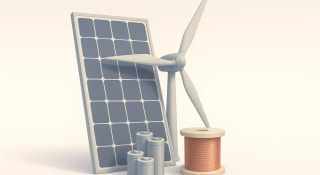
For the better part of a decade, battery energy storage has occupied an awkward space in the power sector. Too expensive to deploy at meaningful scale, too promising to ignore, and perpetually described as something that would matter "in a few years." Well, it's a few years later. The contracts are being signed, the projects are breaking ground, and 2026 is shaping up to be the year the industry finally has to back up everything it has been saying.
This isn't hype. The numbers back it up. Global battery storage capacity additions are on track to exceed 150 gigawatt-hours annually by 2026, according to recent BloombergNEF analysis, more than double what was installed just two years ago. In the United States alone, the Federal Energy Regulatory Commission reported that battery storage accounted for roughly 60% of new capacity applications in the interconnection queue entering 2025. That's a staggering shift from a technology that barely registered five years ago.
What's Actually Driving This
The simplest explanation is that the economics finally make sense. Battery pack prices have fallen roughly 90% over the last decade, and while the rate of decline has slowed, costs have dropped below $100 per kilowatt-hour at the cell level for many lithium iron phosphate (LFP) chemistries. LFP has largely displaced the nickel-manganese-cobalt chemistries that dominated early grid storage deployments, and for good reason: it's cheaper, thermally safer, and cycles better over a long project life.
But cost alone doesn't explain the acceleration. The real catalyst is the grid itself getting desperate. Solar and wind now make up a growing share of generation across markets from Texas to California to Western Europe, and the fundamental problem with both is that they generate power when nature cooperates, not necessarily when people need it. Battery storage is the most direct answer to that mismatch, and grid operators are increasingly treating it as essential infrastructure rather than a nice-to-have supplement.
Texas offers the clearest case study. ERCOT, the state's grid operator, has watched battery storage capacity balloon from under 500 megawatts in 2021 to over 10 gigawatts by mid-2025. During several summer demand peaks, storage resources dispatched at critical moments helped prevent what could have been serious reliability events. That real-world track record matters enormously when utilities and developers are trying to justify the capital expenditure to investors and regulators.
The Projects Getting Built Right Now
The scale of individual projects is also climbing fast. A few years ago, a 100 megawatt-hour storage project was considered large. Now, developers are routinely announcing projects in the 500 MWh to multi-gigawatt-hour range. Broad Reach Power, Intersect Power, and a handful of others have been particularly aggressive in Texas. In California, Pacific Gas & Electric has contracts for storage resources that, combined, exceed 2 gigawatts. Florida is emerging as an unlikely storage hotspot, driven partly by hurricane resilience needs and partly by Florida Power & Light's commitment to pairing solar with storage across its territory.
Internationally, the United Kingdom's Capacity Market has been a steady accelerator, and Australia's National Electricity Market has become something of a proving ground for ambitious projects. The Waratah Super Battery in New South Wales, a 850 MWh Tesla Megapack installation, came online in late 2024 and has already demonstrated how large-scale storage can suppress price volatility during demand spikes. South Korea, Chile, and parts of Southeast Asia are also building out significant storage pipelines driven by the same renewables integration pressure.
Where the Money Is Coming From
Project finance has matured considerably. In the early days of grid storage, getting a project financed required creative deal structures because lenders weren't comfortable with revenue streams that depended on volatile spot market prices. That's changed. Revenue stacking, where a storage asset captures income from energy arbitrage, frequency regulation, capacity payments, and ancillary services simultaneously, has become a bankable thesis. Tax credits under the Inflation Reduction Act's Investment Tax Credit have also been transformative for U.S. projects, effectively reducing capital costs by 30% or more when domestic content requirements are met.
Infrastructure funds and pension capital, which historically avoided anything that smelled like a merchant energy bet, have become active investors in long-term contracted storage. That institutional capital is a signal that the asset class has grown up.
The Debates That Haven't Been Settled
None of this means the path forward is clean. Several tensions are going to define how battery storage actually develops through 2026 and beyond.
Duration is the most persistent argument. Most deployed grid storage today provides two to four hours of discharge capacity. That's useful for smoothing daily solar output curves and responding to evening demand peaks, but it doesn't solve the seasonal storage problem. Multi-day or week-long storage gaps, which occur during extended low-wind, low-solar periods in winter, require either much longer-duration storage or firm generation like gas or nuclear. Long-duration storage technologies, including iron-air batteries from Form Energy, compressed air systems, and various flow battery chemistries, are inching toward commercial viability, but none are deploying at meaningful scale yet. Lithium-ion is winning 2026; the decade after is more open.
Supply chain concentration is also a real vulnerability. The dominant LFP cell supply chain runs through China, specifically through manufacturers like CATL and BYD, who supply cells that end up in products from multiple integrators. The IRA's domestic content incentives are pushing developers toward U.S.-assembled systems, but cell manufacturing capacity outside China remains limited. Several American and European gigafactories are under construction, but timelines have slipped repeatedly. A geopolitical disruption to that supply chain would bite hard.
Then there's the grid interconnection problem, which affects storage just as badly as generation. The queue to connect new projects to the transmission system in the U.S. has become extraordinarily backlogged. FERC Order 2023 attempted to reform the interconnection process, but processing times still stretch to five or six years in many regions. Developers are sometimes building projects that are commercially ready but sitting idle because grid connection hasn't been approved. That's a waste of capital and a genuine drag on how quickly storage can scale.
What This Means for Power Prices and Consumers
Storage has a deflationary effect on wholesale electricity prices during peak demand hours, and that's starting to show up in market data. In California, the evening "duck curve" peak, where prices spike as solar drops off and demand surges, has been noticeably flatter in markets with significant storage participation. In theory, those savings flow through to retail customers over time, though utility rate structures often lag market realities by years.
For commercial and industrial customers, behind-the-meter storage paired with solar is increasingly becoming a serious hedge against demand charges. A factory or data center that can shave its peak grid draw by running on stored solar during the most expensive hours of the day can meaningfully cut its electricity bill. With data center power demand exploding due to AI infrastructure buildout, expect this use case to get a lot more attention through 2026.
Residential storage is growing too, though more slowly than the utility-scale side. Tesla's Powerwall remains the brand most consumers recognize, but competitors from Enphase, SolarEdge, and a growing list of others are competing on price and features. California's NEM 3.0 tariff changes, which dramatically reduced export credits for rooftop solar, have paradoxically accelerated home battery adoption because storing solar for self-consumption has become more valuable than exporting it.
The Capacity Adequacy Conversation
Perhaps the most consequential debate happening inside grid planning circles right now is about how to count storage in resource adequacy calculations. Traditional capacity markets were designed around thermal plants that can generate for many hours on demand. A four-hour battery can do a lot, but it can't sustain output indefinitely. Some grid operators are developing nuanced capacity credit methodologies that account for storage duration and dispatch patterns; others are still applying blunt assumptions that either over-credit or under-credit storage resources. Getting this right matters because it shapes which resources get built and how much storage the market will actually value.
MISO, the Midcontinent Independent System Operator, has been refining its Effective Load Carrying Capability framework for storage, and its methodology is being watched closely by other regions. The answer to "how much firm capacity is a battery worth" turns out to be complicated, and the assumptions baked into that answer will influence hundreds of billions of dollars in investment decisions over the next decade.
The Bottom Line for 2026
Battery storage entering 2026 looks less like an emerging technology and more like a rapidly maturing industry with real infrastructure, real revenue, and real stakes. The pilot project era is effectively over. What comes next is harder: integrating enormous quantities of storage into grid planning frameworks that weren't designed for it, building supply chains that don't depend on a single country, and resolving duration limitations for the longer-term reliability questions that four-hour batteries simply can't answer.
The technology works. The economics work. The remaining challenges are mostly systemic, involving permitting, interconnection, policy, and market design. Those aren't small obstacles, but they're also more tractable than fundamental questions about whether lithium-ion could ever be cheap enough. That question has been answered. Now the grid has to figure out what to do with the answer.