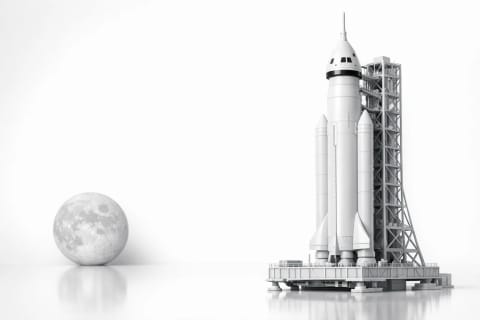
Fifty-two years is a long time to wait. The last humans to travel to the Moon were Eugene Cernan and Harrison Schmitt, who lifted off from the lunar surface in December 1972 aboard Apollo 17. Since then, human spaceflight has been confined largely to low Earth orbit, a zone that sits roughly 400 kilometers above our heads.
Artemis II is about to change that in a meaningful, visceral way.
NASA's Artemis II mission will send four astronauts on a free-return trajectory around the Moon, reaching a maximum distance of approximately 9,600 kilometers beyond the far side. That puts the crew farther from Earth than any humans have ever traveled. The mission is not a landing, but calling it "just a flyby" misses the point entirely.
Who's Going, and Why It Matters
The crew is a deliberate statement. Commander Reid Wiseman, a Navy test pilot and former ISS expedition commander, leads the mission. Pilot Victor Glover becomes the first Black astronaut to travel beyond low Earth orbit, a milestone that carries enormous cultural weight.
Mission specialists Christina Koch and Canadian Space Agency astronaut Jeremy Hansen round out the crew. Hansen, notably for Canadians, will be the first non-American to fly on a lunar mission, a nod to the international architecture that underpins the Artemis program.
NASA didn't pick these four by accident. Glover has extensive operational experience aboard the ISS, Koch holds the record for the longest single spaceflight by a woman, and Wiseman is the kind of calm, experienced commander you want in a vehicle that's never carried humans before.
Hansen brings CSA's institutional buy-in and years of astronaut training. This is a crew built for scrutiny, because Artemis II will face plenty of it.
What Artemis II Actually Has to Accomplish
The mission profile is deceptively complex. After launching atop the Space Launch System from Kennedy Space Center's Launch Complex 39B, the Orion spacecraft will spend roughly 30 minutes in a parking orbit before the upper stage reignites to send the crew on a translunar trajectory.
Unlike Apollo, which used a dedicated lunar module, Orion is flying solo. There's no second vehicle waiting in orbit. If something goes wrong deep in cislunar space, the options narrow considerably.
That reality shapes everything about how Artemis II is designed. The mission's primary objectives are validation of life support systems, crew interfaces, and the spacecraft's overall performance in the deep space environment.
Specifically, NASA wants to confirm that Orion's environmental control and life support system (ECLSS) functions correctly with humans aboard, something Artemis I could not test because it flew uncrewed. The ECLSS manages cabin pressure, temperature, CO2 scrubbing, and water recovery.
Get any of those wrong 400,000 kilometers from Earth and the consequences are obvious.
The mission duration is planned at approximately 10 days. That's short enough to limit risk, long enough to generate meaningful data on how the crew and spacecraft interact under realistic conditions.
The Orion Spacecraft: A Decade in the Making
Orion has been in development since the mid-2000s, originally under the Constellation program before that was cancelled and later revived under Artemis. Lockheed Martin is the prime contractor.
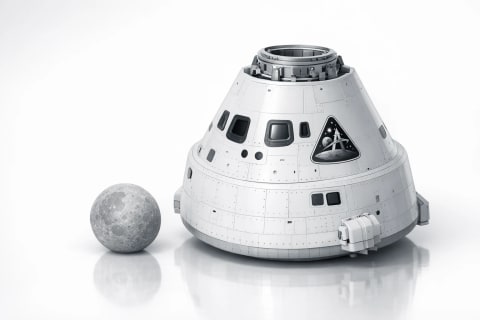
The spacecraft consists of a crew module capable of carrying four astronauts and a European Service Module built by Airbus for the European Space Agency, which provides propulsion, power, and thermal control.
Artemis I, which flew in late 2022, was the uncrewed shakedown flight. It lasted 25.5 days, traveled 2.25 million kilometers, and successfully demonstrated the heat shield during a high-velocity reentry at around 11 kilometers per second. But Artemis I also revealed a problem: heat shield ablator material eroded more than predicted during reentry.
NASA spent considerable time investigating, ultimately concluding the issue was related to trapped gases being released during the extreme heating phase. Engineers have since refined the models and are confident in the design for Artemis II, though the agency acknowledges it will be watching reentry data extremely closely.
There's also been scrutiny of the crew module's water pressure relief valves, which showed unexpected behavior during Artemis I. NASA redesigned those valves and has tested the fixes extensively. These aren't minor footnotes; they're the kinds of technical details that separate a successful crewed mission from a catastrophic one.
SLS: The Rocket Nobody Loves But Everyone Needs
The Space Launch System has been one of the more controversial elements of the Artemis program. Development costs have ballooned to somewhere north of $23 billion, and each launch is estimated to cost between $2 billion and $4 billion depending on how you account for fixed infrastructure expenses.
Critics, including many in the commercial space community, argue that SLS is an expensive government jobs program that could have been replaced by commercial heavy-lift vehicles at a fraction of the cost.
That debate is real, and it isn't going away. SpaceX's Starship, which is being developed separately as the human landing system for Artemis III, costs a fraction of SLS per launch in theory, though Starship hasn't yet demonstrated full end-to-end mission capability.
For Artemis II specifically, SLS is what's available, what's certified, and what's flying. Whatever its political baggage, the rocket produces 8.8 million pounds of thrust at liftoff, which is more than the Saturn V, and it's the most powerful rocket to ever successfully fly.
What Comes After
Artemis II sets the table for Artemis III, which is the actual landing mission targeting the lunar south pole.
That mission will involve Orion rendezvousing with a modified Starship vehicle in lunar orbit, transferring two crew members to the lander, and descending to a region near the lunar south pole that scientists believe contains water ice deposits in permanently shadowed craters.
Those ice deposits are more than scientifically interesting. Water can be split into hydrogen and oxygen, which are rocket propellants. Establishing a reliable source of propellant at the Moon changes the economics of deep space exploration in ways that matter for anything that comes after, including potential Mars missions.
Artemis II doesn't go near the surface, but every system it validates moves that future a little closer to being real.
International stakes are also significant. China's Chang'e program has been advancing rapidly, with Chang'e 6 returning far-side lunar samples in 2024 and the country announcing plans for a crewed lunar mission before 2030. Whether you frame Artemis as a race or not, the geopolitical context is impossible to ignore.
What Enthusiasts Should Watch For
If you're following Artemis II closely, a few things are worth paying attention to beyond the launch broadcast.
- ECLSS performance data: NASA will share crew health telemetry and system performance summaries throughout the mission. Watch for any anomalies in CO2 levels or pressure management.
- The far-side communication blackout: When Orion passes behind the Moon, the crew loses contact with Earth for roughly 30 minutes. How Orion's onboard systems handle autonomous operations during that window matters for future missions.
- Reentry heating: Orion will reenter Earth's atmosphere at around 40,000 kilometers per hour. Post-mission analysis of the heat shield will directly influence Artemis III planning.
- Crew workload assessment: NASA's human factors teams will be evaluating how the four-person crew interacts with Orion's interface systems, many of which use touchscreen displays rather than traditional switches. This sounds mundane until you consider that interface confusion under stress has contributed to accidents in aviation and spaceflight before.
A Mission That Earns Its Hype
Space announcements often get inflated with breathless coverage that fades the moment a launch scrubs or a technical delay stretches weeks into months. Artemis II deserves a more grounded kind of excitement.
This is genuinely hard, genuinely dangerous, and genuinely consequential work being done by a mix of government engineers, international partners, and commercial contractors who have been grinding at this problem for years.
Four people are going to strap into a capsule, light a rocket that produces more thrust than any vehicle currently flying, and travel farther from Earth than any human being has gone in more than half a century.
They'll spend ten days in a vehicle that has never carried humans before, in an environment where rescue is impossible and every system has to work. When they splash down in the Pacific, the data they bring back will shape human spaceflight for the next decade.
That's not hype. That's just what's happening.