Key takeaways
- 1Battery energy storage has moved from a supporting role to the central question of the entire clean energy transition.
- 2The IEA says system flexibility is becoming the key challenge as wind and solar expand, and that battery deployment is accelerating but not fast enough.
- 3BloombergNEF forecasts record global storage additions of 188 GW/535 GWh in 2026, up 45% on 2025.
- 4Ember found that adding wind to solar and batteries cuts the median cost of meeting 90% of demand from $105/MWh to $86/MWh.
- 5The IEA expects behind-the-meter storage to grow almost sixfold, to over 670 GWh, by 2031.
There is a moment in almost every infrastructure transition where the supporting cast becomes the main event. For the clean energy shift, that moment is now. Battery energy storage systems, long treated as a useful complement to solar and wind farms, have become the central question everyone in the industry is trying to answer at once.
The math is not complicated. Solar panels generate power when the sun shines. Wind turbines spin when the wind blows.
Neither of those conditions lines up neatly with when hospitals run at full load, when factories open their doors, or when millions of people come home and turn on their air conditioning. That gap between generation and demand is not new, but it has never been this consequential.
Why 2026 Became the Inflection Point
Renewable capacity growth has not followed a simple upward line in 2026. The IEA forecasts global renewable capacity additions will decline 11% this year, ending 21 consecutive years of record growth, though still reaching the second-highest level ever.
The main drag is a nearly 55% fall in China's solar PV additions in January through September, while global wind additions are broadly unchanged from 2025.
Even so, the IEA says system flexibility is becoming the key challenge as wind and solar expand, and that battery storage deployment is accelerating but not fast enough. That framing matters: the constraint is no longer primarily about how much renewable generation exists, but about whether the grid can absorb and dispatch it reliably.
What changed is partly scale and partly economics. As solar and wind have gotten dramatically cheaper, they have been deployed at volumes that stress the grid in ways that smaller installations never did.
Curtailment, where grid operators are forced to simply throw away renewable energy because there is nowhere for it to go, has become a regular feature of power markets from California to Germany.
What Battery Energy Storage Actually Does
Battery energy storage systems, commonly called BESS, do something conceptually simple: they absorb electricity when supply exceeds demand and release it when demand exceeds supply. In practice, doing that reliably at grid scale is an enormous engineering and logistics challenge.
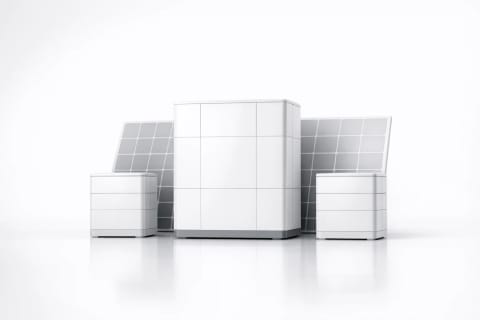
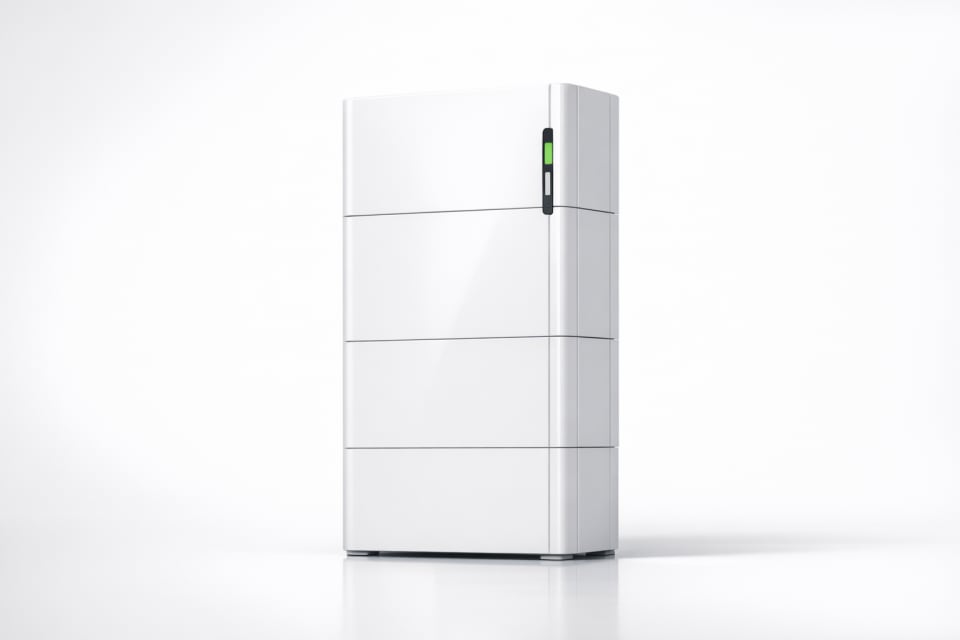
A utility-scale BESS installation is not a row of AA batteries. These are large facilities packed with lithium-ion cells, power electronics, thermal management systems, and software that communicates with grid operators in real time. Some installations can discharge enough power to supply tens of thousands of homes for several hours.
The technology works. The question is whether it can be deployed fast enough and cheaply enough to matter.
Storage systems can respond to grid frequency changes in milliseconds, faster than any gas peaker plant.
Storing cheap off-peak power and discharging during expensive demand spikes reduces costs across the system.
Afternoon solar generation can be held and released in the evening hours when demand peaks and sun output drops.
The IEA says behind-the-meter batteries let households and businesses reduce exposure to electricity price volatility and, with the right market design and incentives, help meet overall system flexibility needs.
The economic case for storage has also shifted. Ember found that adding wind to solar and batteries cuts the median cost of meeting 90% of demand from $105/MWh to $86/MWh. But the cost curve, while encouraging, has not moved fast enough on its own to close the gap between where storage deployment is and where it needs to be.
The Scale of the Problem
To understand why analysts are sounding alarms, consider what the renewable buildout actually requires on the storage side. Every gigawatt of solar or wind added to the grid increases the system's dependence on some form of dispatchable backup. For decades, that backup was natural gas peaker plants.
The goal now is to replace that role with storage.
Figures as stated in this article.
That is a fundamentally different infrastructure ask. Gas peakers are sitting assets that run a few hundred hours a year. Storage systems cycle constantly, charging and discharging in response to real-time grid conditions.
The wear, the operational complexity, and the capital requirements are all different. Scaling this up to match the pace of renewable deployment is a genuine challenge with no simple shortcut.
The situation is compounding. As more renewables come online without adequate storage behind them, curtailment grows, investor confidence in new projects can erode, and grid operators face harder choices about reliability. The consequence of underinvesting in storage is not just a slower energy transition.
It is a potentially unstable grid.
Industry and Policy Signals
What is notable about the current moment is the breadth of voices making the same argument. In mid-November 2026, BloombergNEF forecast record global storage additions of 188 GW/535 GWh in 2026, up 45% on 2025. Ember published findings on the cost savings from pairing wind with solar and batteries.
The IEA, in its Renewables 2026 report, said battery deployment is accelerating but not fast enough.
Policy responses are starting to reflect this. The IEA says faster grid investment, battery storage expansion, and permitting reforms could make tripling global renewable capacity achievable by 2031. Storage-specific incentives, grid interconnection reforms, and procurement mandates from utilities have all gained traction in various markets.
The direction is clear even if the pace is debated.
On the industry side, the investment picture is complicated. Project developers, battery manufacturers, and utilities are all trying to position themselves in a market that is growing fast but still faces real uncertainties around permitting timelines, interconnection queues, and long-term revenue streams. The underlying demand is there.
The friction is in execution.
The Technology Isn't Standing Still
Lithium-ion, mainly lithium iron phosphate, dominates the battery storage being built today, largely because the same manufacturing scale that drove down electric vehicle costs also reduced the price of stationary storage cells.
But it is worth noting that pumped-storage hydropower, at 201 GW at the end of 2025, is still described by the International Hydropower Association as the world's largest form of energy storage.
The grid storage problem has different requirements than an EV battery pack. Duration, cycle life, safety at large scale, and total cost of ownership over decades matter more than energy density.
That is pushing serious investment into alternative chemistries and form factors, including iron-air batteries, sodium-ion systems, vanadium flow batteries, and compressed air storage.
Long-duration storage, systems capable of storing energy for 10 hours or more, is the particular holy grail right now. Most current BESS installations are built around two to four hours of discharge capacity.
That is enough to handle evening demand peaks, but not enough to manage multiday weather events or seasonal mismatches between renewable supply and grid demand.
What Has to Happen Next
The path forward is not mysterious. More storage needs to be built, faster, and in the right locations relative to where renewable generation is concentrated.
The IEA expects behind-the-meter storage to grow almost sixfold, to over 670 GWh, by 2031, as households and businesses use batteries to reduce exposure to electricity price volatility and, with the right market design and incentives, help meet overall system flexibility needs.
Permitting and interconnection processes need to move at a speed that matches the urgency of the problem. Financing structures need to reflect the long-term value that storage provides to grid stability, not just the narrow revenue streams that current market designs often allow. The technical pieces largely exist.
The systemic and institutional pieces are where the real work is.
What 2026 is clarifying is that the energy transition is not primarily a generation problem anymore. The harder, less glamorous, and arguably more important work is building the storage backbone that lets renewable generation actually serve the grid reliably. That is where the transition either succeeds or stalls.
Sources
IEA, Renewables 2026, Executive Summary — iea.org/reports/renewables-2026/executive-summary
IEA, Renewables 2026, Renewable Electricity — iea.org/reports/renewables-2026/renewable-electricity
BloombergNEF via ESS News, November 12, 2026 — ess-news.com
International Hydropower Association, Pumped Storage Capacity Surpasses 200 GW — hydropower.org