For years, the pitch for electric vehicles came with an uncomfortable asterisk. Yes, you'd save on fuel. Yes, maintenance costs would drop.
But the sticker price? That was a problem. Buying an EV meant paying a premium that could stretch into the tens of thousands of dollars over a comparable gas-powered car, and a lot of buyers simply weren't willing to do that math.
That calculation is changing, and faster than most people expected.
A convergence of falling battery costs, maturing supply chains, and fierce competition among automakers has pushed EV prices into territory that would have seemed optimistic just three years ago.
Analysts at BloombergNEF now project that EVs in the small and mid-size segments will reach upfront price parity with internal combustion engine vehicles in the United States and Europe by 2026, with some models already crossing that threshold in 2024. That's not a rounding error. That's a structural shift in what it costs to electrify your commute.
The Numbers Behind the Shift
Battery pack costs are the clearest place to see what's happening. In 2013, the average cost per kilowatt-hour of lithium-ion battery capacity was around $780. By 2023, that number had fallen to roughly $139 per kWh, according to BloombergNEF's annual battery price survey.
Some manufacturers with vertically integrated supply chains are reporting internal costs closer to $100 per kWh, which has long been considered the informal threshold at which EVs can compete on sticker price without heavy subsidies.
That cost compression shows up in real products. The Chevy Equinox EV launched at $34,995, directly undercutting its own gas-powered sibling in some trim levels. Tesla's Model 3 Standard Range now starts under $39,000 before any federal tax credit.
In China, BYD's Seagull has broken below $10,000, and BYD's broader lineup is forcing Western automakers to reckon with what mass-market electrification actually looks like when someone builds for volume from the ground up.
These aren't anomalies or loss-leader pricing stunts. They reflect genuine cost reductions working their way through the supply chain.
Why This Moment Is Different From Previous Predictions
The EV industry has been promising price parity "soon" for about a decade. So why should anyone believe this time is different?
A few structural reasons stand out. First, battery chemistry has genuinely diversified. Lithium iron phosphate, or LFP, batteries have become widely adopted by manufacturers outside China, bringing down costs significantly because they don't rely on cobalt or nickel to the same degree as older NMC chemistries.
Tesla, Ford, and others have incorporated LFP into their entry-level models. The trade-off in energy density is real but manageable for vehicles that don't need 400-mile range to satisfy most daily drivers.
Second, production scale has hit meaningful thresholds. Gigafactories in the U.S., Europe, and Asia are running at volumes that were theoretical as recently as 2020. When you're producing hundreds of thousands of battery packs per year at a single facility, fixed costs per unit drop substantially.
Ford's BlueOval City in Tennessee and GM's Ultium Cells plants in Ohio and Tennessee represent tens of billions in committed capital, and that capital only makes sense if production is sustained at scale.
Third, competition has become genuinely brutal. Tesla's repeated price cuts over 2023 and into 2024 weren't charity. They were a market signal.
Rivals responded, and the result is a segment with meaningful downward price pressure that wasn't there when EVs were novelty purchases for early adopters.
What This Means for the Average Buyer
Reaching purchase price parity matters enormously for mainstream adoption, and that's not because most consumers are irrational about total cost of ownership. It's because most people don't buy cars with spreadsheets. They walk into a dealership or browse listings online, and the number on the window is the number that shapes their initial reaction.
A car that costs $8,000 more than the alternative requires a mental accounting exercise most shoppers just don't do.
Remove that upfront premium and a different buyer pool opens up. Market researchers at J.D. Power have found that price is consistently the top barrier cited by "EV considerers," the segment of buyers who are open to going electric but haven't committed.
In their 2023 U.S. Electric Vehicle Consideration Study, 46 percent of people who had not purchased an EV cited purchase price as a primary concern. That number is almost certainly declining as sticker prices fall.
Federal incentives under the Inflation Reduction Act have been doing some of this work in the interim, shaving up to $7,500 off qualifying vehicles. But income caps and vehicle eligibility requirements have left a lot of potential buyers on the sideline. Organic price parity doesn't have those restrictions.
It applies to everyone, regardless of income, tax liability, or whether a particular model clears the North American content requirements.
How Automakers Are Responding
Manufacturers are reading the same data and adjusting their strategies accordingly. General Motors has publicly walked back some of its more aggressive EV volume targets, but the Equinox EV's pricing tells a story about where GM sees the real opportunity.
The strategy appears to be concentrating resources on high-volume, affordable segments rather than spreading across the portfolio simultaneously.
Volkswagen's situation in Europe is instructive. The automaker has faced significant pressure from cheaper Chinese imports and from its own cost structure, leading to painful restructuring discussions at German plants.
The response has included accelerating development of the ID.2, a sub-30,000-euro EV targeting buyers who currently drive Golfs and Polos. Volkswagen doesn't have the luxury of waiting for the market to mature. It needs to capture mass-market buyers before someone else does.
Hyundai and Kia have taken a different angle, focusing on strong product design and rapid charging capability, with the Ioniq 6 and EV6 earning significant loyalty from buyers who might have otherwise stretched for a Tesla.
Their upcoming affordable models, including a sub-$30,000 Kia EV planned for the U.S. market, suggest the Korean automakers see the coming price-parity moment as a chance to expand share rather than just defend it.
The Charging Network Effect
Price parity also changes the calculus for charging infrastructure investment. When EVs are premium products, charging networks can target premium locations, upscale retail centers, highway corridors between major metros.
When EVs become ordinary cars driven by ordinary people, the charging network has to reach ordinary places too, apartment complexes, strip malls, rural fast-chargers, workplaces without dedicated facilities.
That expansion is already underway. The National Electric Vehicle Infrastructure program, funded by the bipartisan infrastructure law, has committed $7.5 billion to build out charging along highway corridors and in underserved communities.
Private investment from Electrify America, Tesla's now-open Supercharger network, and a growing number of regional operators is adding to that base. The premise underlying all of it is that EV adoption is going to accelerate, and the evidence for that premise is getting stronger.
There's also a feedback loop worth understanding. More affordable EVs bring in more buyers. More buyers create more demand for charging.
More charging demand attracts more investment. More investment improves the charging experience, which reduces one of the remaining barriers to adoption. The whole system starts reinforcing itself in a way that it hasn't been able to when EVs were still aspirational purchases.
What Still Needs to Happen
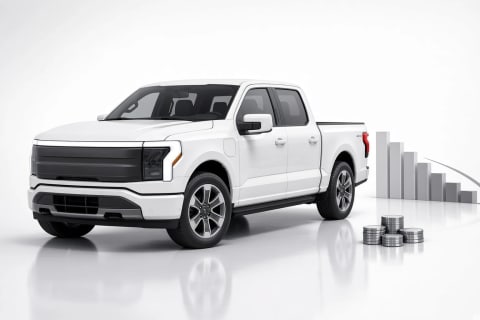
Price parity is not a solved problem across all segments. Trucks and large SUVs remain expensive to electrify at scale, and those categories represent a massive portion of U.S. vehicle sales. The Ford F-150 Lightning starts above $55,000, and the Rivian R1T is considerably more.
Closing that gap is going to take more time and likely another generation of battery chemistry, possibly solid-state cells, which remain years from volume production.
Used EV prices have also been falling precipitously, which is good for first-time buyers but complicates residual values for automakers and fleet operators trying to project lifetime costs. A used Chevy Bolt can be found in many markets for under $20,000.
That's genuinely disruptive for gasoline vehicles in the same price range, but it also raises questions about long-term battery health and warranty coverage that the industry hasn't fully addressed for mainstream audiences.
Still, the direction of travel is clear. Electric vehicles are getting cheaper to build, cheaper to buy, and cheaper to own. The inflection point that analysts have been projecting for years is arriving not with a single dramatic announcement but as a gradual compression of the price gap, model by model, segment by segment.
For buyers who have been waiting on the sidelines, the wait is getting a lot shorter.