Key takeaways
- 1In 2025, at least 7 EV nameplates that were actually on sale in the United States were discontinued, including the Ford F-150 Lightning, the Nissan Ariya, and the Acura ZDX.
- 2Business Insider's running tracker counts nearly 20 US EVs discontinued or postponed since January 1, 2026, including the Tesla Model S and Model X.
- 3On February 12, 2026, the EPA finalized the rescission of its 2009 greenhouse-gas endangerment finding and repealed all federal greenhouse-gas emission standards for light-, medium-, and heavy-duty vehicles.
- 4The UK opened a formal review of its zero-emission vehicle mandate on August 14, 2026, with options that include cutting the 2030 target to as low as 50 percent.
- 5After federal EV incentives ended September 30, 2025, US EV sales fell to about 234,000 in Q4 2025, down 46 percent from Q3.
The American electric vehicle market is consolidating at a striking pace. In 2025, at least 7 EV nameplates that were actually on sale in the United States were discontinued — and that count does not include the pauses, halted imports, and pre-launch cancellations that also reshaped the market that year.
The great EV consolidation is not some future event. It is happening right now, in real time, across nearly every segment of the market.
The Graveyard Fills Up
When EV optimism was at its peak, the prevailing assumption was that every major automaker would successfully field a lineup of electric vehicles and that buyers would steadily migrate toward them. That assumption is being stress-tested hard.
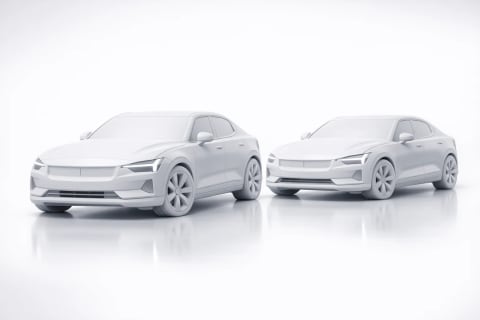
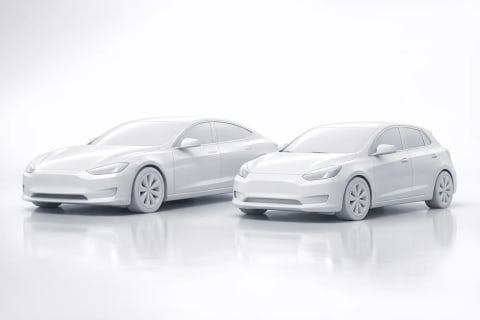
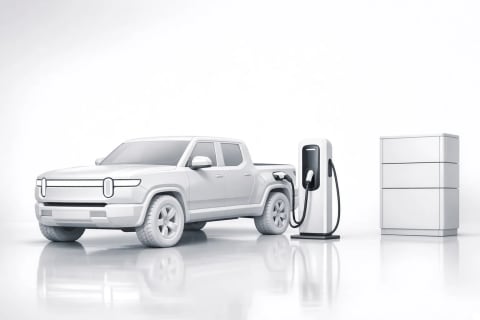
Counting only EV nameplates that were actually on sale in the US, 2025 departures total at least 7:
Production ended December 2025.
Dropped for MY2026.
Production ended September 2025.
One of the on-sale US nameplates that departed in 2025.
One of the on-sale US nameplates that departed in 2025.
One of the on-sale US nameplates that departed in 2025.
Ended October 2025.
That is not a rounding error. It is a structural signal.
The momentum has carried into 2026. Business Insider's running tracker, updated through early October 2026, counts nearly 20 US EVs discontinued or postponed since January 1, 2026 — a mix of true discontinuations, pauses, single-trim cuts, and models canceled before launch.
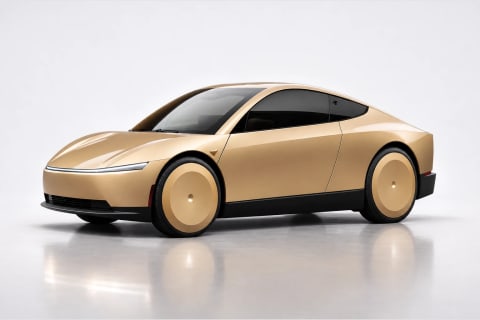
That list includes the Tesla Model S and Model X, the Volvo EX30 and EX40, the Honda Prologue, the BMW i4 and iX, the Porsche Taycan wagons, Polestar 3 and 4 with no 2027 models planned, and the Mercedes EQE sedans and Maybach EQS SUV, among others.
Figures as stated in this article.
The pattern cuts across brands and price points. Luxury EVs that couldn't justify their margins, entry-level electrics that couldn't compete on price, and mid-range models caught between competing pressures all appear in the casualty list.
Automakers Pushing Back on Targets — and Regulators Are Responding
Discontinuations and pauses are only part of the story. Automakers are pushing back on mandated EV sales targets, and regulators have responded — in some cases decisively.
In the United Kingdom, a cut is still pending but widely anticipated. After pressure from manufacturers — industry groups have long called for urgent relief — the government opened a formal review of its zero-emission vehicle mandate on August 14, 2026.
That mandate requires 33 percent of new car sales to be electric in 2026, rising to 80 percent by 2030. The options under consultation include cutting the 2030 target to as low as 50 percent. On November 9, 2026, the BBC reported that a significant reduction is expected that week, while Downing Street said no decision had been made.
The fact that regulatory frameworks on both sides of the Atlantic are bending — one already broken, one on the verge — reflects how much commercial reality has diverged from earlier projections.
After federal EV incentives ended September 30, 2025, US EV sales fell to about 234,000 in Q4 2025, down 46 percent from Q3 and 36 percent year over year — a drop Cox Automotive described as widely forecast. Full-year 2025 EV sales came in just under 2024's 1.30 million, down about 2 percent, with EV share at 7.8 percent of the market.
Figures as stated in this article.
Why So Many Models Are Failing
Several forces are converging to accelerate the shakeout. Charging infrastructure remains uneven outside of major metro areas, which limits the addressable market for many vehicles. Interest rates have made financing a new car — especially a more expensive EV — a harder sell at the dealership level.
At the same time, Tesla's pricing moves have compressed margins across the segment. When Tesla cuts prices aggressively, every other EV maker selling into the same general market faces an immediate problem: their cost structures rarely allow them to match it without taking losses they can't sustain.
“The great EV consolidation is not some future event.”
Chinese automakers, meanwhile, are adding competitive pressure from a different direction. Their cost advantages in battery manufacturing and vehicle assembly are substantial, and while tariffs have limited their direct presence in the American market, their influence on global pricing benchmarks is real.
Who Gets Left Behind
Not all discontinued EVs are created equal. Some were always marginal products — niche experiments built to satisfy regulatory requirements in specific states or to generate press coverage during the early EV boom years. Those models were never going to survive a rationalized market.
Others were genuine attempts to build a business, backed by real capital and real customer interest, but couldn't navigate the combination of high production costs, slow demand growth, and intensifying competition.
Those discontinuations represent something more painful: sunk investment, laid-off workers, and customers left without a supported vehicle.
Consumers who bought discontinued models now face a quieter but real problem: reduced software support, shrinking service networks, and vehicles that may depreciate faster than comparable models from surviving brands.
What Survival Looks Like
The automakers still standing in the EV space generally share a few traits. They either have massive scale — like Tesla and the largest traditional manufacturers — or they have found a defensible niche with strong customer loyalty and pricing power.
Some manufacturers are surviving by retreating rather than advancing — trimming their EV lineups to one or two models, concentrating marketing and service resources, and accepting slower growth in exchange for financial sustainability. It is not a glamorous strategy, but it may be the right one for the current market.
What This Means for Buyers
Buyers should research a manufacturer's financial stability and long-term product commitments before signing.
In 2025, at least 7 on-sale EV nameplates left the US market — including the Ford F-150 Lightning, Nissan Ariya, Acura ZDX, Mercedes-Benz EQB, and Polestar 2 — and Business Insider counts nearly 20 more EVs discontinued or postponed in 2026 so far, including the Tesla Model S and Model X, the Volvo EX30, and the Honda Prologue.
Owners of discontinued vehicles can face reduced software support and shrinking service networks.
Established names with strong balance sheets are not immune to retreat, as the 2025 discontinuation list makes clear, but they are better positioned to honor warranty obligations and maintain parts supply than smaller players running on thin margins.
The Bigger Picture
The EV transition was never going to be linear. Every major technology shift in the automotive industry — from carburetors to fuel injection, from analog to digital instrument clusters — has produced winners and losers, false starts and course corrections.
What the past year is showing is that the EV shakeout is arriving faster and hitting harder than the industry's promotional materials ever suggested it would.
At least 7 on-sale models gone in 2025, more paused or canceled before they ever reached a showroom, nearly 20 additional actions already logged in 2026, federal vehicle emissions standards repealed in the United States, and a significant cut to the UK's 2030 EV sales target expected imminently — these are all part of the same story.
The gap between the promise of mass EV adoption and what buyers are actually willing to do is proving stubbornly difficult to close.
That doesn't mean EVs are failing. The vehicles that survive this period of consolidation will likely be better, more competitive, and more commercially sustainable than the ones that didn't make it. But the transition is messier, slower, and more punishing than the most optimistic projections allowed for.
That is the defining automotive story of this moment.