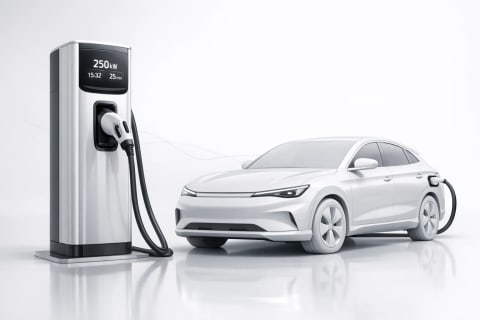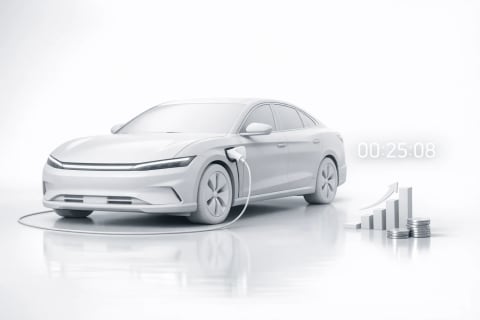
For years, NIO's battery swap technology was treated as a curiosity. A clever trick, sure. An interesting alternative to sitting at a fast charger for 20 minutes, absolutely.
But a serious, industry-reshaping infrastructure play? Most analysts weren't convinced. Geely apparently disagrees, and it just put $2 billion on the table to prove it.
The deal, which gives Geely a 30% stake in NIO's battery-swap subsidiary, is the kind of move that redraws competitive lines in China's already chaotic EV market. NIO gets a massive capital injection and a mainstream manufacturing partner with real scale.
Geely gets access to swap infrastructure it couldn't have built as quickly or cheaply on its own. And the rest of the industry is left figuring out what exactly just happened.
What NIO Actually Built
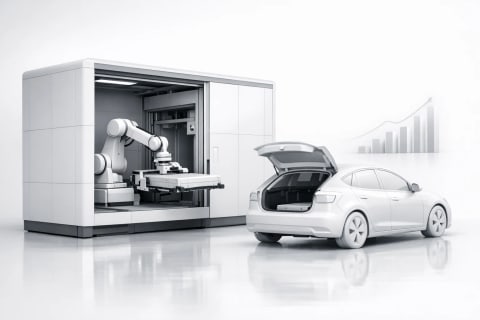
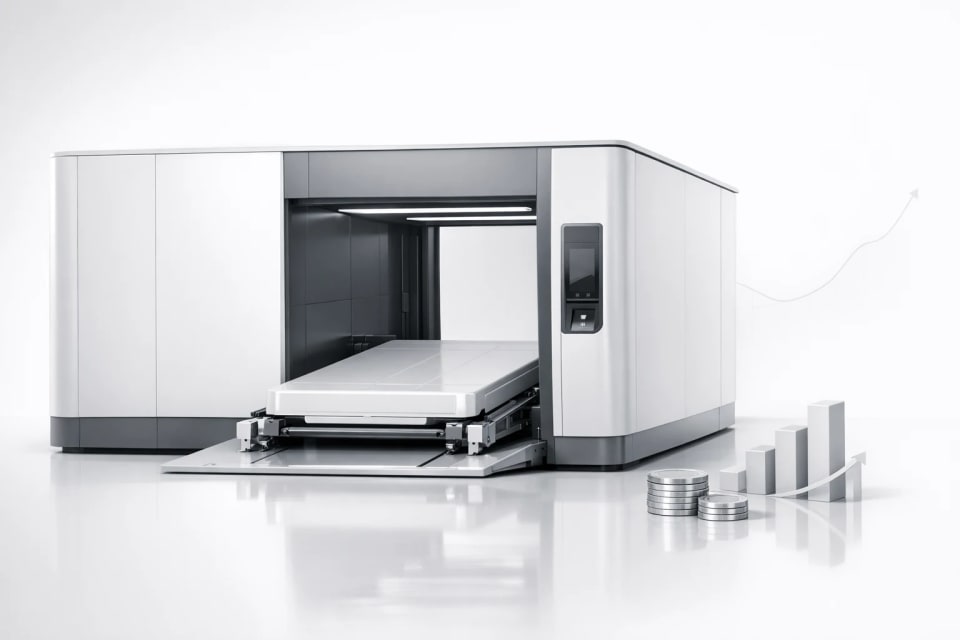
To understand why this deal matters, you need to appreciate what NIO has spent the last several years constructing. The company currently operates over 2,400 battery swap stations in China, and each one is a genuinely impressive piece of engineering.
A robotic arm locates and removes the depleted battery pack from underneath the car, slots in a fully charged replacement, and sends the driver on their way in about three minutes. No cables, no waiting, no range anxiety spiral in a parking garage.
NIO calls this system Power Swap, and it has been a core part of the brand's identity since the company launched. The idea isn't just convenience. It's a fundamentally different model for thinking about battery ownership.
NIO lets customers buy vehicles without the battery, paying a monthly subscription for access to the swap network instead. That keeps the upfront price of the car lower and shifts the battery's long-term degradation risk onto NIO rather than the buyer.
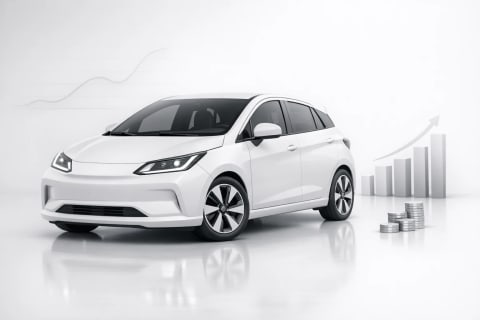
The business model is clever, but scaling it is expensive. Each swap station costs somewhere between $500,000 and $750,000 to build and equip.
Running a network of thousands of them, across multiple battery form factors, with enough charged packs available at each location to handle demand spikes, requires serious capital and even more serious logistics. NIO has been doing it mostly alone. That changes now.
Why Geely Wants In
Geely is not a company that makes impulse decisions with $2 billion. The Hangzhou-based conglomerate owns Volvo, Polestar, Lotus, and a portfolio of other brands that stretches across Europe and Asia.
Its CEO, Eric Li (Li Shufu), has a reputation for thinking decades ahead, which is why the company's interest in battery swapping deserves to be taken seriously.
Geely has been developing its own swap-capable vehicles through its Zhidou and Ruilan sub-brands, and it partnered with battery giant CATL on a swap standard called EVOGO back in 2022. But that effort hasn't scaled anywhere near as fast as NIO's network.
Rather than spend another five years and billions of dollars trying to catch up, Geely has effectively bought access to an existing, functioning infrastructure at a moment when speed matters enormously.
China's EV market is intensely competitive right now. BYD is dominant on price. Huawei-backed Aito is winning on software and smart features.
NIO has always competed on premium experience and service, with battery swap as a centerpiece of that pitch. Geely's bet is that swap infrastructure, deployed at scale, could become a differentiator across multiple price segments, not just the luxury tier where NIO currently operates.
The Standardization Problem, and Whether This Solves It
Battery swapping has one enormous structural problem that has haunted the concept since Better Place tried and spectacularly failed to make it work in Israel and Denmark back in the early 2010s. Every automaker wants their battery pack to be a different shape, a different voltage, a different mounting system.
A swap station that works for a NIO ES8 is useless for a Geely Galaxy or a Volvo EX30.
NIO has been pushing for years to get other automakers onto a common swap standard. The company launched what it calls its Open Swap Platform in 2023, and a handful of smaller Chinese brands have signed on.
But the big players have largely stayed away, partly out of competitive concerns and partly because retooling a vehicle platform around a swappable battery architecture is genuinely difficult and expensive.
A Geely partnership changes the calculus here significantly. Geely has the manufacturing muscle and the brand portfolio to make a shared standard viable in a way that NIO couldn't alone. If Geely's brands, NIO's brands, and eventually a few others all ship vehicles compatible with the same swap infrastructure, the network effect starts to kick in.
More compatible cars means more demand for swap stations. More swap stations means the technology becomes more attractive to other automakers. It's a flywheel that requires a big enough push to get spinning, and $2 billion from Geely might be exactly that push.
Still, convincing BYD, SAIC, or any of the other major Chinese automakers to standardize around a platform they don't control is a different challenge entirely. That part of the puzzle remains genuinely unsolved.
What This Means for Battery Ownership
One of the least-discussed implications of this deal is what it does to the concept of battery ownership itself. NIO's subscription model already decouples the battery from the car in a way that most automakers haven't been willing to try.
If Geely's brands adopt similar models, and if the swap network expands aggressively as both companies have suggested it will, a meaningful chunk of new EVs sold in China could operate on subscription-based battery access within the next five years.
For consumers, there are real advantages to this. Battery degradation is one of the most persistent sources of anxiety among EV owners. A battery that holds 90% of its original capacity after five years is good.
One that holds 75% after eight years is a resale nightmare. Under a swap model, that degradation problem essentially disappears for the driver. You always get a charged, reasonably fresh battery at the station.
The operator absorbs the long-term cost.
The flip side is dependency. Once you're in a swap network, you're committed to that infrastructure for the life of your vehicle. If the network shrinks, if pricing changes, or if the company operating it runs into financial trouble, you're stuck.
NIO has faced real financial pressure over the past two years, and while the Geely investment eases that considerably, it doesn't eliminate the risk entirely.
How This Reshapes the Competitive Picture
China's automakers have spent the last three years in an increasingly brutal price war. Margins are thin, losses are common, and consolidation is starting to look inevitable.
Against that backdrop, a deal that strengthens two companies simultaneously while creating shared infrastructure is notable for what it signals about where the competition is actually headed.
The fight is no longer purely about who can build the cheapest electric car. Infrastructure, software, and service ecosystems are becoming competitive moats in ways they weren't even two years ago. BYD has its own charging network and vertical integration.
Huawei's HiCar and Harmony OS are making software the differentiator. NIO and Geely are now betting that physical swap infrastructure, deployed densely enough, becomes a reason customers choose their vehicles over someone else's.
That's a significant strategic bet. Building thousands of additional swap stations is expensive and time-consuming even with ample capital. Geely's manufacturing scale and NIO's operational experience are a strong combination, but execution over the next 24 to 36 months will determine whether the theory holds up in practice.
The Global Angle
Geely's international footprint raises an obvious question. Could battery swap infrastructure eventually appear in European markets through Volvo or Polestar? The honest answer is that this deal alone doesn't make that likely.
European charging infrastructure is further along than it was two years ago, regulatory environments are different, and retrofitting existing vehicle platforms for swap compatibility is a substantial engineering undertaking.
But Geely has a track record of playing long games. Volvo's transition from a conventional automaker to an EV-focused brand happened over more than a decade.
If battery swapping proves commercially successful at scale in China, the pressure to evaluate it for other markets will grow, particularly as NIO has expressed ambitions to expand its own European presence through its Onvo and Firefly sub-brands.
For now, the most immediate consequences are concentrated in China. Faster station rollouts, more vehicles compatible with the swap standard, and two major automakers with aligned financial incentives to make the whole thing work.
That's a different situation than the industry was in six months ago, and it deserves to be taken seriously as a signal of where EV infrastructure is actually heading.
Whether battery swapping becomes a global norm or remains a Chinese-market specialty depends on a lot of factors that neither NIO nor Geely fully controls. But the $2 billion vote of confidence from one of China's most sophisticated automotive conglomerates makes dismissing the idea a lot harder than it used to be.