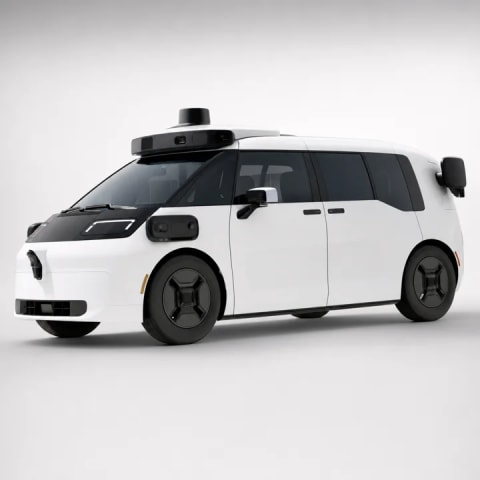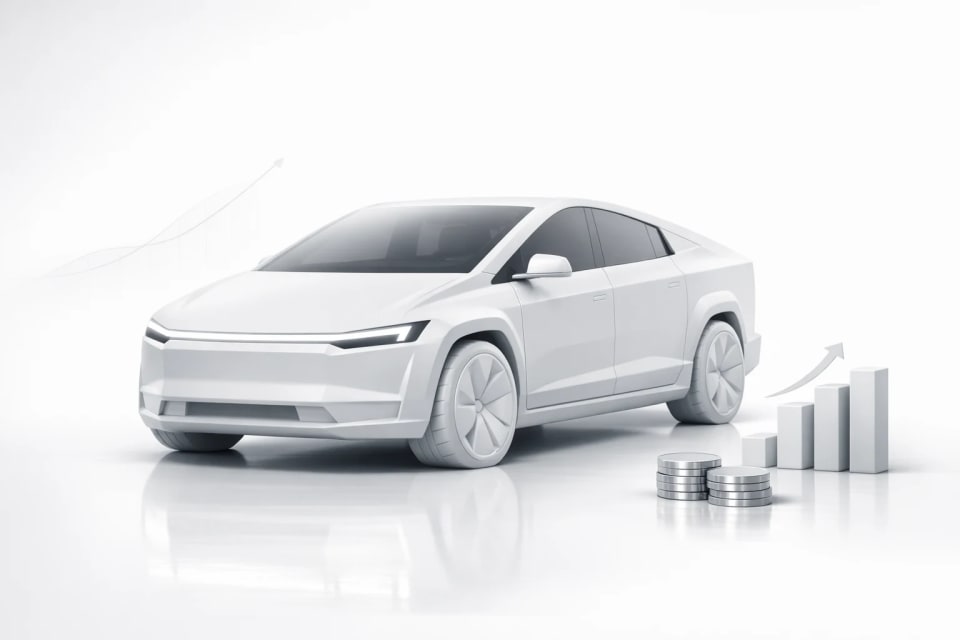
Tesla didn't throw a big press event for the Cybercab's public rollout. There was no ticker-tape moment, no carefully staged demo with a celebrity in the back seat. The vehicle just started showing up, quietly, in a way that felt almost deliberately low-key for a company that usually treats product launches like stadium concerts. And yet, within days, the Cybercab had managed to generate more regulatory friction and industry anxiety than most vehicles do in their entire commercial lifespan.
That's partly because of what the Cybercab is, and partly because of what it's missing.
A Car With No Steering Wheel, No Pedals, and Apparently No Patience for Regulation
The Cybercab is a two-seat electric vehicle built from the ground up as a purpose-designed autonomous taxi. It has no steering wheel. No brake pedal. No accelerator. Those aren't optional extras that got left out to save money; their absence is the entire design philosophy. Tesla is betting that Full Self-Driving technology has matured to the point where human override controls aren't just unnecessary, they're a concession Tesla no longer wants to make.
On paper, the specs are genuinely interesting. The vehicle is compact, with a footprint closer to a Smart car than a Model 3, and Tesla has suggested a per-mile cost target well below $1, which would significantly undercut both Uber's current average and Waymo's pricing in its operational markets. The interior is minimalist to a degree that makes a Model S look cluttered. Two seats, a central screen, ambient lighting, and a vibe that is somewhere between a luxury pod and a airport people-mover.
But here's where it gets complicated. Federal Motor Vehicle Safety Standards in the United States have historically required vehicles operating on public roads to have manual controls available to a human occupant. The National Highway Traffic Safety Administration has a specific exemption pathway for autonomous vehicles, but it requires an application, a review process, and explicit approval. Tesla's quiet rollout has prompted immediate questions about whether any of that paperwork is actually in order.
Regulators Are Not Happy, and They're Saying So Out Loud
NHTSA confirmed it is in contact with Tesla regarding the Cybercab's compliance status. That phrasing, "in contact," is regulatory-speak for something between a polite inquiry and a formal investigation, and the agency hasn't been particularly warm about the distinction. California's Department of Motor Vehicles, which has become the de facto gatekeeper for autonomous vehicle testing and deployment given how many AV companies are headquartered there, is also reviewing whether Tesla's operational permits cover a vehicle without manual controls.
This is not a trivial concern. Waymo spent years working through exactly this regulatory process before deploying its fully driverless vehicles commercially in San Francisco and Phoenix. The company filed extensive documentation, participated in public comment periods, and operated under provisional permits before getting broader clearance. Cruise, despite its catastrophic 2023 incident in San Francisco, had also gone through that structured process. Tesla appears to be taking a different approach, which is something between "ask forgiveness later" and a genuine belief that its existing regulatory relationships cover the Cybercab's deployment.
Tesla's position, as communicated through limited public statements, seems to be that its prior approvals for FSD testing apply here and that the Cybercab represents a natural extension of technology already operating on public roads in Tesla consumer vehicles. Regulators don't appear to see it that way.
What This Means for the Robo-Taxi Market
Waymo currently operates thousands of autonomous rides per week across San Francisco, Phoenix, and Los Angeles. Its vehicles use a combination of lidar, radar, and cameras. The system is expensive, which is reflected in pricing that isn't dramatically cheaper than a standard rideshare fare once you account for surge pricing and service area limitations. Waymo's advantage is that it has regulatory credibility, years of real-world data, and a safety record that, despite some incidents, has held up reasonably well under scrutiny.
Tesla is coming at this from a completely different angle. The Cybercab relies entirely on cameras and Tesla's neural-network-based FSD system, with no lidar. Elon Musk has been vocally dismissive of lidar for years, calling it a "crutch" that real autonomy doesn't need. Whether or not that's true at scale is still genuinely contested among autonomous vehicle engineers, many of whom think lidar provides a safety margin that camera-only systems don't replicate cleanly.
The competitive threat to Waymo is real but probably not immediate. Tesla has the manufacturing scale and the brand recognition to deploy Cybercabs at volumes Waymo simply cannot match right now. If Tesla gets regulatory clearance and its FSD system performs reliably in taxi conditions, which involve a much wider variety of passengers, pickup locations, and edge cases than a personal vehicle sees, the pricing advantage alone could reshape the market. A sub-$1-per-mile autonomous ride would be a serious problem for both Waymo and for Uber, which has spent years trying to recover its market position after the self-driving disasters of the mid-2010s.
Uber's response has been characteristically pragmatic. The company has existing partnerships with Waymo and other AV operators, positioning itself as a platform layer rather than a technology developer. A Tesla robotaxi network that runs entirely through Tesla's own app and doesn't integrate with Uber is a more threatening scenario than one where Tesla eventually joins the Uber platform as another fleet operator. Right now, Tesla seems to want to own the entire stack, which is very much the Elon Musk way of doing things.
The Safety Question Nobody Wants to Answer Directly
Removing human controls from a vehicle is not inherently dangerous. Plenty of transit systems run fully automated vehicles, including airport shuttles, some subway lines, and purpose-built people-movers in controlled environments. The difference with the Cybercab is that it's operating in uncontrolled urban traffic, with pedestrians, cyclists, unpredictable drivers, and all the ambient chaos of a real city.
FSD has improved substantially over the past two years. Tesla's V12 release was a genuine step change in how the system handles complex intersections and unusual situations. But "substantially improved" and "ready to operate without any human backup in a commercial taxi setting" are very different bars. Tesla has not published detailed disengagement data or incident rates in a format that allows independent analysis. Waymo publishes regular safety reports with specific numbers. That transparency gap matters a lot when regulators and the public are trying to assess whether these vehicles are safe enough to operate without a driver who can hit the brakes.
There's also the specific liability question that comes with removing human controls entirely. If something goes wrong in a Cybercab, there is no human driver to assign partial fault to. Tesla owns the outcome completely, which is either a confident statement about the technology's reliability or a significant financial and reputational risk, depending on how you read it.
What Consumers Actually Get
If you live in an area where Tesla eventually deploys the Cybercab commercially, the pitch is straightforward. A clean, quiet, fully electric autonomous ride at a price point potentially lower than current rideshare. No driver to make awkward conversation with. No tipping. No surge pricing, if Tesla's network management works as intended.
The service area question is important though. Waymo's driverless service covers specific geofenced zones even in markets where it officially operates. A Cybercab network would face the same constraint; FSD performs differently in dense urban cores versus suburban sprawl versus rural roads. Tesla will almost certainly roll out in easier environments first, which means early access will be concentrated in a handful of tech-industry-dense cities.
For EV enthusiasts specifically, the Cybercab represents something worth watching closely. Tesla's ability to deploy a purpose-built autonomous vehicle at scale would validate a huge chunk of the company's long-term business thesis, which has always been about more than selling consumer cars. The energy and autonomy businesses are where Tesla's future multiples come from, at least according to analysts who still believe in the company's growth story. A successful Cybercab rollout, meaning one that survives regulatory scrutiny and doesn't produce high-profile incidents, would be genuinely significant for how Tesla is valued and how the broader EV-to-autonomy transition gets priced by the market.
A failed rollout, one involving regulatory shutdowns or a serious accident, would set the entire sector back. That's the uncomfortable reality sitting underneath all the product excitement. The Cybercab isn't just a new car. It's a stress test for whether the fastest-moving major player in autonomous vehicles has moved fast enough, or just fast.