Key takeaways
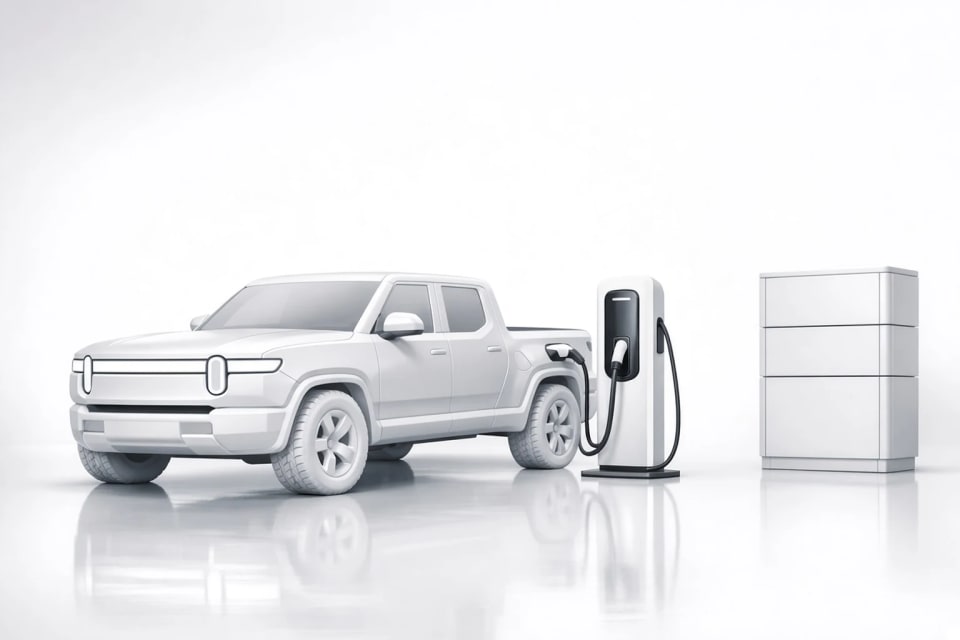
- 1Rivian has been aggressively expanding its Adventure Network, with public DC fast charging stations now available to non-Rivian EVs.
- 2The company is developing AI-driven in-car concierge features designed to personalize the ownership experience over time.
- 3Rivian's dual focus on charging infrastructure and software services mirrors the playbook Tesla used to entrench its own customer base.
- 4Combining a growing physical network with smart software could shift Rivian's business model toward recurring revenue streams.
Rivian does not get nearly enough credit for how quietly methodical it has been. Over the past year, the company has been doing two things simultaneously: pouring investment into public fast charging infrastructure, and building the software foundation for AI-driven services that could redefine what owning a Rivian actually feels like.
Neither effort is finished. Both are further along than most people realize.
The Charging Network Is No Longer Just for Rivian Owners
Rivian's Adventure Network started as a proprietary perk, a string of DC fast chargers placed at trailheads, campgrounds, and gateway towns that Rivian's own trucks and vans could use. That picture has changed significantly.
Rivian has been converting its network to the Combined Charging System standard, opening those stations to drivers of other brands.
This is a meaningful strategic pivot. Proprietary networks have a ceiling; open networks grow faster because utilization goes up and the political case for permitting becomes easier when more drivers benefit. Rivian seems to understand this.
The shift also generates revenue from non-Rivian customers, which helps justify the capital expenditure of building out remote, sometimes difficult-to-reach locations.
The Adventure Network's positioning is genuinely differentiated. Rather than clustering chargers near highway on-ramps the way Electrify America tends to, Rivian has focused on destinations. You charge while you hike, camp, or eat, not while you watch traffic pass on an interstate.
That approach suits Rivian's outdoor-lifestyle brand identity, but it also serves a real gap in the market that other networks have largely ignored.
Speed and Reliability: The Two Things That Actually Matter
A charging network is only as valuable as its uptime and charge speed, and Rivian has been investing in both. The company's Dual Charge Port vehicles can accept up to 220 kilowatts of DC fast charging, which translates to roughly 25 miles of range recovered per minute under ideal conditions.
For a truck with a 149-kilowatt-hour battery, that matters a lot.
Reliability has historically been a sore spot across the entire public charging industry, not just for Rivian. The Department of Energy found in recent studies that a meaningful share of public chargers in the United States are out of service at any given time. Rivian has made uptime a stated priority, and its J.D.
Power scores for charging satisfaction have trended in the right direction, though the sample sizes for Rivian-specific data remain smaller than Tesla's.
The competitive pressure here is real. Tesla's Supercharger network remains the benchmark for reliability and density. But Tesla has also pulled back on some expansion commitments and laid off its entire Supercharger team in 2024 before partially reconstituting it.
That instability created an opening, and Rivian has been moving into it with deliberate speed.
AI in the Cabin: More Than a Voice Assistant Gimmick
The more speculative, and arguably more interesting, part of Rivian's roadmap is its push into AI-powered in-vehicle services. Rivian has been building toward what it describes as a concierge-style experience, one where the vehicle learns owner preferences, anticipates needs, and surfaces relevant information without requiring explicit commands.
Think less "Hey, play music" and more a system that notices you typically charge to 90 percent before a long weekend trip, pre-conditions the battery the night before without being asked, and suggests a charging stop along your planned route before you've opened the navigation app.
That kind of ambient intelligence is the goal, and it requires a substantial investment in both onboard compute and cloud infrastructure.
Rivian's software platform, built in-house rather than licensed from a third party, gives the company control over how these features develop. That matters because AI personalization depends on longitudinal data, patterns built up over months of driving, charging, and user interaction. A platform you own lets you train on that data.
A platform you license often does not.
How This Compares to What Tesla and Others Are Doing
Tesla's Full Self-Driving subscription, priced at $99 per month, has demonstrated that EV owners will pay for software if the value proposition is clear enough. General Motors tried a similar move with its Cruise and OnStar bundles, with considerably messier results.
The difference usually comes down to whether the feature actually works reliably in daily use.
Rivian is approaching AI features more cautiously than Tesla, at least publicly. There are no announcements of full autonomous driving ambitions.
The focus seems to be on lower-stakes but genuinely useful features: smarter routing, predictive maintenance alerts, personalized charging recommendations, and trip planning that accounts for real-time weather and terrain. These are things an outdoor-focused truck owner genuinely needs.
The system learns usage patterns and charges at optimal times without manual input, reducing costs on time-of-use electricity rates.
AI monitors vehicle health and flags potential issues before they become roadside problems.
Trip planning integrates charging stops, terrain data, and weather to recommend routes tailored to the driver's actual style.
Climate, audio, and seat settings adjust based on learned preferences and context, such as time of day or trip type.
The adventure-use case also gives Rivian a defensible niche for AI features that generic automotive AI assistants cannot easily replicate.
Knowing that a forest road ahead is unpaved, that a particular trailhead has no cell service, or that river crossings require airing down tires are the kinds of contextual details that matter to Rivian's core customers and that a well-trained, outdoor-specific AI model could actually handle well.
The Business Model Shift Hiding in Plain Sight
Taken together, the charging network expansion and the AI services push represent a quiet but significant shift in what Rivian is trying to be. Selling trucks is the foundation. But the real long-term play appears to be building a platform that generates ongoing revenue from the same customers who bought the hardware.
The charging network contributes to this in two ways. First, it keeps Rivian owners within the Rivian orbit rather than driving them to third-party networks where the brand relationship weakens. Second, opening to non-Rivian vehicles brings in direct revenue and expands the brand's visibility among potential future buyers.
A driver who charges at a Rivian station four times before buying their next EV is a warmer prospect than one who has never interacted with the brand at all.
AI services, if executed well, create the subscription layer that makes the financial model more predictable. Automakers universally want recurring software revenue because it smooths out the boom-and-bust cycle of vehicle sales.
Rivian is not the first to pursue this, but its outdoor-focused identity gives it a more coherent story than, say, a legacy automaker trying to retrofit a software strategy onto a century-old business.
What Rivian Still Needs to Prove
Rivian's financials have improved but the company is not yet consistently profitable. Production has ramped, with over 57,000 vehicles produced in 2023, but the path to the kind of scale that makes both charging infrastructure and AI development economically sustainable is still being walked, not completed.
The AI features, in particular, carry execution risk. Ambient intelligence that actually works is extraordinarily difficult to build. The gap between a demo that impresses at a press event and a daily-driver experience that owners find indispensable is wide, and many automakers have stumbled across it.
Rivian will need to ship features that work before it can build a subscription business around them.
The charging network has more tangible progress to point to. Stations are open, drivers are using them, and the move to CCS compatibility expands the addressable market.
But network density still lags Tesla significantly, and in the EV charging business, density often determines whether a driver bothers to seek out your stations or defaults to whatever is most convenient.
None of that diminishes the ambition or the logic of the strategy. Rivian is building something coherent: a brand with a specific audience, a physical network that serves that audience's use cases, and a software layer that could make owning the vehicle feel more like a relationship than a transaction. Whether it gets there is an open question.
That it has a clearer plan than most EV startups is not.
Sources
- Rivian official newsroom and investor presentations, 2023-2024
- U.S. Department of Energy, Alternative Fuels Station data
- J.D. Power EV Experience Study, 2023
- Tesla Full Self-Driving subscription pricing, Tesla.com
- Reuters reporting on Tesla Supercharger team layoffs, April 2024