Key takeaways
- 1Approving a vehicle's design, permitting it on specific roads, and authorizing it to charge fares are three separate legal gates that must all be cleared independently.
- 2A purpose-built cabin with no steering wheel or pedals faces a fundamentally different compliance problem than a conventional car operating without a human in the driver's seat.
- 3California's rules show this clearly: the inspected October 2026 registers list Zoox for driverless testing and the CPUC pilot program, not deployment; pilot rides cannot charge fares.
- 4The Zoox federal exemption limits introductions into interstate commerce for commercial deployment to 2,500 vehicles per 12-month period, which is not the same as a concurrent fleet limit or permission to operate everywhere.
- 5Several jurisdictions have enacted statutory pathways for no-controls vehicles, but a pathway is not an issued permit, and an issued permit is not evidence a public service is running today.
Three separate gates determine whether a driverless vehicle can legally carry paying passengers: the vehicle itself must meet manufacturing standards or hold a specific exemption; it must be authorized to operate on particular roads within a defined area; and the operator must hold a separate commercial permit to charge a fare.
A country or state that has passed enabling legislation has opened a pathway, not necessarily issued any of those three approvals.
The Three-Gate Framework
Understanding why "legal" is such a slippery word in this space requires separating the gates clearly. Vehicle approval concerns whether a specific make and model can be manufactured, imported, and sold. Road permission covers where and when that vehicle may operate, usually tied to a geographic area, speed limit, and weather envelope.
Fare authority is the commercial layer: the right to charge a passenger money for the trip.
A vehicle can clear the first gate and still be barred from public roads. It can clear the first two and still be prohibited from charging fares.
The United States: Federal Exemptions and State Layers
At the federal level, NHTSA does not issue a blanket permit for autonomous vehicles. It sets manufacturing safety standards, and manufacturers must either comply with every applicable standard or obtain a specific exemption for the ones they cannot meet.
In July 2026, NHTSA published a model-specific, entity-specific exemption for Zoox, covering portions of eight federal motor vehicle safety standards including manual turn-signal controls, foot-operated brake provisions, rearview mirrors, and specific glazing rules.
NHTSA's grant allows up to 2,500 vehicles introduced into interstate commerce for commercial deployment per 12-month period, across a two-year exemption window running from July 31, 2026 through July 31, 2028. [US2]
California illustrates why the federal layer is only the beginning. The state DMV maintains separate lists for driverless testing and driverless deployment. As of the October 2026 register snapshots, Zoox holds a driverless testing permit.
Waymo appears on the deployment list; Zoox does not. [CA1]
The California Public Utilities Commission maintains a third, separate register for passenger-service permits. Zoox holds a driverless pilot permit. Waymo holds a driverless deployment permit.
The CPUC's own program rules state that monetary compensation may not be charged for rides in pilot-program vehicles. A federal manufacturing exemption does not substitute for either of those state approvals. [CA2–3]
California's 2026 adopted regulations also explicitly address vehicles without manual controls. The adopted deployment rules state that any vehicle not equipped with a steering wheel, brake pedal, and accelerator pedal must comply with all applicable federal motor vehicle safety standards, or the manufacturer must provide evidence of an exemption.
That is a conditional pathway, not approval of any particular vehicle. Implementation is staggered, not one universal commencement date. [CA4–5]
Europe: Type Approval, Small Series, and the AVP Distinction
Europe has built a functioning type-approval framework for fully automated vehicles, but the scope of what has actually been unlocked for unlimited-series production is narrower than headlines often suggest.
Commission Delegated Regulation 2022/2236, which entered into force on December 6, 2022, amended the EU's whole-vehicle type-approval framework to explicitly accommodate vehicles without a driver seat. For steering, the regulation states that requirements applicable to the steering control are not applicable.
For braking, it substitutes ADS-managed activation for driver-operated muscular performance. The scheme is a small-series vehicle-approval route, not a road or fare permit. [A-EU1]
The companion ADS type-approval regulation, Implementing Regulation 2022/1426, consolidated as of March 24, 2026, defines approved use cases as vehicles operating in a predefined area, hub-to-hub on a predefined route with fixed start and end points, and automated valet parking. [A-EU2]
Europe's March 2026 amendment, Implementing Regulation 2026/481, and its companion whole-vehicle act, Delegated Regulation 2026/1188, effective June 22, 2026, advance the unlimited-series approval pathway specifically for automated valet parking.
These AVP-specific acts do not establish unlimited-series approval for general urban passenger robotaxis. [A-EU3–4]
The regulation explicitly contemplates vehicles without conventional driving-task controls, but also requires equipment permitting manual driving; where manual mode is possible only at walking speed, nearby remote control within a maximum of six metres is permitted.
Vehicle approval is separate from authority approval of a defined operating area and road registration. Passenger-transport licensing remains a separate gate; no named fare service is established here. [DE1–2]
Asia: Planned Amendments and Local Permissions
Japan has operated a specified-operation permission scheme for Level 4 driverless vehicles since April 2023, under provisions enacted in April 2022.
MLIT's May 2025 interim report describes an individual Article 55 safety-standard relaxation route for vehicle-by-vehicle decisions by the regional transport bureau chief, which may be subject to conditions, time limits and operating restrictions.
That is a vehicle-standards route, not the operational permission itself. [JP2, A-JP2–3]
China separates national product admission, police registration, road-area designation, and transport-business licensing into distinct gates. A 2024 MIIT explanation of the national pilot program stated explicitly that selection of pilot consortia does not mean product admission or road-use permission has been obtained. [CN1]
Shenzhen's Special Economic Zone regulations, revised in May 2026 and effective July 1, 2026, go further on the vehicle side. Article 34 of the current text states that fully automated vehicles may lack manual driving mode and corresponding equipment and may have no driver.
The same article limits no-driver vehicles to areas and road sections designated by the municipal police traffic authorities. Separate articles require national or Shenzhen product-catalog admission and police registration. Commercial transport also requires an operator transport-business licence and vehicle transport certificate.
These are local SEZ rules, not China-wide permission or evidence of a named fare service. [A-CN1–2]
What the Law Actually Establishes
Three dated legal milestones, not three service launches
| Dec 6, 2022 | EU vehicle-approval route |
|---|---|
| Jul 1, 2026 | Shenzhen local-law revision |
| Jul 31, 2026 | Zoox exemption window begins |
These examples are conditional pathways, not an exhaustive live-service directory. Enabling legislation creates a pathway; it does not issue a permit. A permit covers a specific operator, vehicle, area, and set of conditions; it does not cover the industry.
A vehicle exemption addresses specific safety standards for a specific model; it does not authorize that model to operate on any road in any state or charge any passenger a fare.
Sources
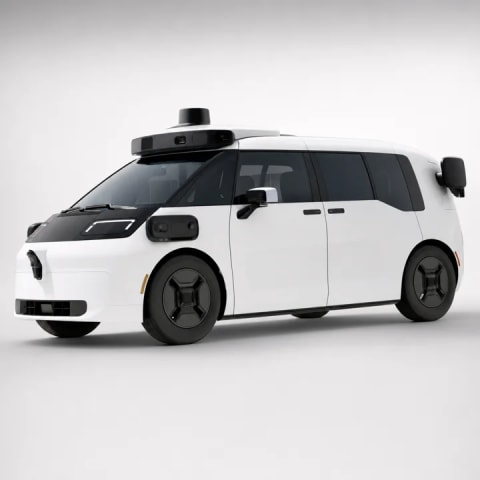
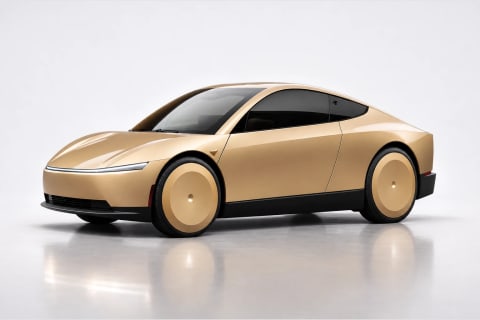
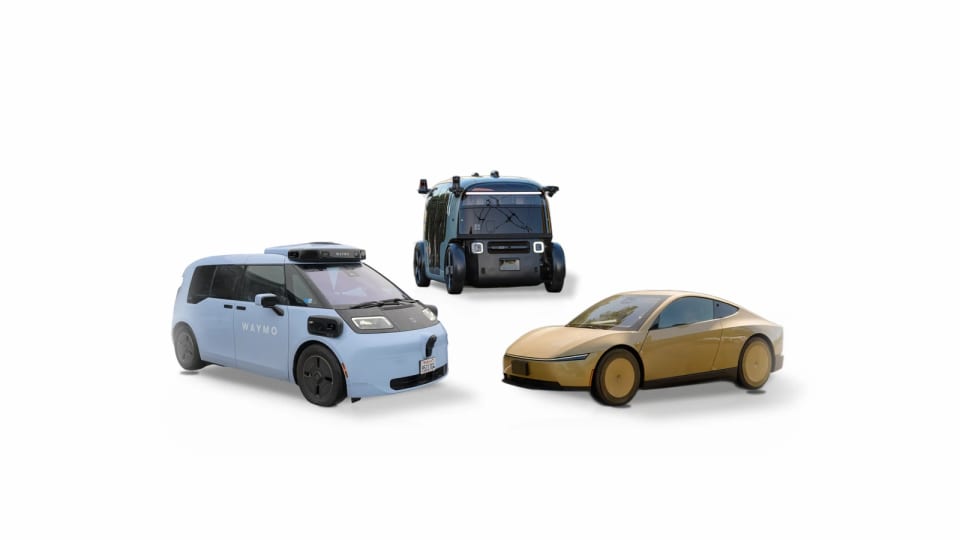
- Hero photos: Waymo Zeekr by Daniel Lu (Dllu)/Wikimedia Commons, CC BY-SA 4.0; Tesla Cybercab by Daniel Lu (Dllu)/Wikimedia Commons, CC BY-SA 4.0; Zoox robotaxi (photographed in San Francisco) by 9yz/Wikimedia Commons, CC BY 4.0. Backgrounds removed, cropped, resized and combined; studio background and contact shadows added by MoovX. Composite: CC BY-SA 4.0.
- NHTSA, Zoox Grant of Temporary Exemption, Federal Register, July 31, 2026
- California DMV, Autonomous Vehicle Testing Permit Holders (updated October 22–23, 2026)
- CPUC, Autonomous Vehicle Program Permits Issued
- CPUC, Autonomous Vehicle Programs (fare rules)
- California DMV, Order to Adopt Article 3.8 Regulations
- Japan National Police Agency, Self-Driving (Level 4 specified-operation permission scheme)
- MLIT, Safety Document 3-3, November 4, 2026 (driverless vehicle standards proposal)
- MLIT, Autonomous Driving Working Group interim report, May 30, 2025
- MLIT, Safety Standards Article 55 (PDF version label: June 29, 2007; collection indexed as of March 31, 2026; no complete amendment-chain audit)
- Germany StVG §1e (official consolidated text)
- Germany AFGBV (amended by law of May 12, 2026)
- Commission Delegated Regulation (EU) 2022/2236, OJ L 296, November 16, 2022
- Commission Implementing Regulation (EU) 2022/1426, consolidated March 24, 2026
- Commission Implementing Regulation (EU) 2026/481, March 3, 2026
- Commission Delegated Regulation (EU) 2026/1188, June 2, 2026
- MIIT, National Pilot Program Q&A, June 4, 2024
- Shenzhen SEZ Intelligent Connected Vehicle Management Regulations, 2026 revision (effective July 1, 2026)