Autonomous vehicles were supposed to be past the awkward phase by now. Years of promises, billions in investment, and thousands of hours of public road testing were meant to deliver a product that could speak for itself.
Instead, this week handed the industry one of its more uncomfortable news cycles in recent memory, centered on a Waymo recall that exposed a surprisingly basic failure mode: vehicles that could steer directly into closed construction zones.
The National Highway Traffic Safety Administration flagged the issue after Waymo's software failed to adequately account for temporary traffic controls, specifically the kind of lane closures marked by cones and signage that any human driver learns to navigate in the first few weeks of driving.
Waymo moved quickly to push an over-the-air software fix, and the company emphasized that no injuries resulted from the incidents that triggered the investigation. That's the good news. The harder reality is that this kind of recall, even when handled swiftly, chips away at the public confidence these companies desperately need to build.
What the Waymo Recall Actually Tells Us
The construction zone problem isn't just a software bug. It reveals something more structural about how autonomous systems handle edge cases, situations that fall outside the tidy categories the training data was built around.
Construction zones are notoriously chaotic: signs contradict each other, lane markings disappear mid-road, workers wave vehicles through in ways that don't follow any rulebook. Human drivers handle this through a mix of contextual reasoning, social cues, and sheer improvisation.
Current AV systems, for all their sensor sophistication, still struggle with exactly this kind of unstructured ambiguity.
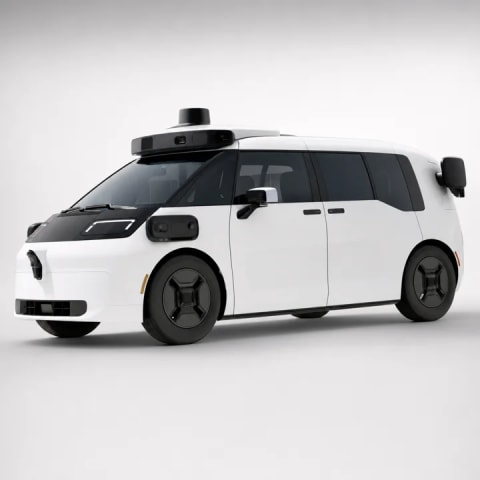
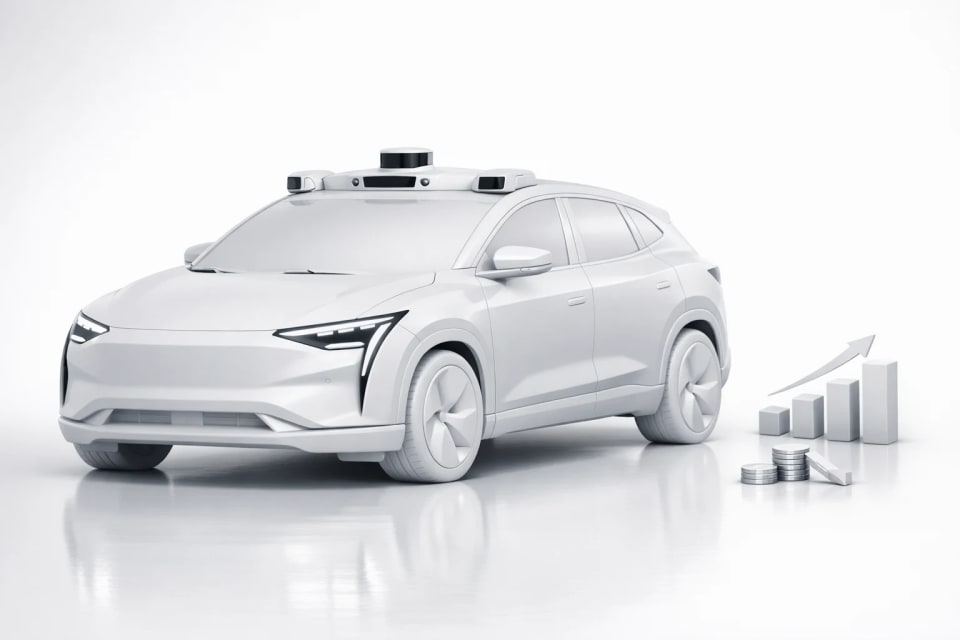
Waymo's vehicles rely on a combination of lidar, radar, and camera inputs processed through its own in-house AI stack. The company has logged over 7 million fully autonomous miles across its commercial operations in San Francisco, Phoenix, and Los Angeles. That's a genuinely impressive number.
But it also means that when a failure mode surfaces at this scale, it surfaces in a way that's visible, documented, and regulatorily significant. There's no hiding a recall.
For context, Waymo issued a separate recall earlier this year after two vehicles collided with the same truck in separate incidents.
NHTSA has become notably more attentive to AV safety filings since General Motors' Cruise division had its operating license suspended in California in late 2023, following an incident where a robotaxi dragged a pedestrian who had already been struck by another vehicle.
That Cruise episode permanently altered the regulatory mood around driverless cars, and the industry has been operating in its shadow ever since.
Cities and Investors Aren't Backing Down
Here's where the story gets genuinely complicated. Despite the recalls and the skepticism, the money keeps moving. Waymo raised $5.6 billion in a funding round completed in late 2024, backed by Alphabet and outside investors including Andreessen Horowitz and Silver Lake.
That kind of capital doesn't flow toward a dying bet. It flows toward a long-term infrastructure play, the kind where the payoff is 10 to 15 years out and the early turbulence is priced in.
Cities are equally committed, if cautiously so. Austin, Texas has become something of an AV proving ground, with both Waymo and Tesla's yet-to-launch robotaxi service circling it as a key market. San Francisco, for all its complicated history with Cruise, still hosts Waymo's most active commercial deployment.
Phoenix remains the company's most permissive operating environment, where fully driverless rides have been available to the general public since 2020. Internationally, Baidu's Apollo Go service has completed over 7 million rides in China, operating in cities including Wuhan, Chongqing, and Beijing, often at lower cost than traditional taxis.
The economic logic for cities is straightforward enough. Robotaxis theoretically reduce traffic fatalities, improve mobility access for elderly and disabled residents, and could eventually reduce the need for expensive transit subsidies. Whether those benefits materialize at scale is the trillion-dollar question.
Tesla's Shadow Over the Whole Conversation
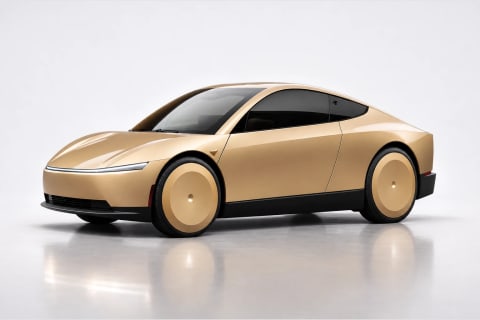
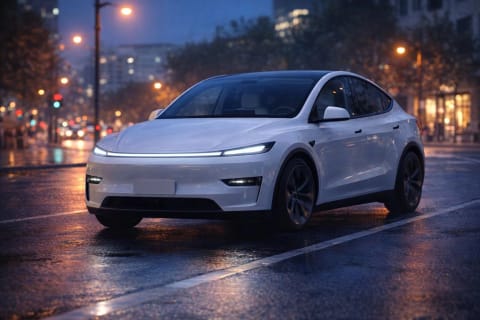
No discussion of the robotaxi race is complete without addressing Tesla, even though Tesla's robotaxi service doesn't actually exist yet in any meaningful commercial form. Elon Musk has promised a paid autonomous ride service in Austin and San Francisco by mid-2025, using a purpose-built vehicle called the Cybercab that was unveiled last October.
The Cybercab features no steering wheel and no pedals, a genuinely bold design statement for a vehicle whose regulatory approval pathway remains murky at best.
Tesla's approach differs fundamentally from Waymo's. The company relies exclusively on cameras and its own neural network processing, rejecting lidar as unnecessary and expensive. Musk argues that humans navigate the world with eyes alone, so cameras should be sufficient.
Waymo's engineers would strongly disagree, and they have the sensor arrays to back it up. This isn't just a philosophical dispute; it has real safety implications that regulators will eventually have to adjudicate.
Tesla also lacks the dedicated safety validation infrastructure that Waymo has spent years building. Waymo employs a fleet of remote operators who can assist vehicles in ambiguous situations. Tesla's Full Self-Driving system, even in its most advanced "Supervised" form, still requires a human behind the wheel to take over.
Bridging that gap, technically and legally, is a much bigger jump than Tesla's public communications tend to suggest.
Regulation Is the Real Bottleneck
Right now, AV regulation in the United States is a patchwork. California requires permits and detailed incident reporting. Arizona is far more permissive, which is precisely why Phoenix became the first city with a fully commercial robotaxi service.
Texas sits somewhere in between. At the federal level, NHTSA has broad authority over vehicle safety but has been slow to develop specific AV standards, leaving companies to self-certify against existing rules designed for human-driven cars.
Congress has tried and failed multiple times to pass comprehensive AV legislation. The SELF DRIVE Act passed the House back in 2017 but died in the Senate. More recent attempts have similarly stalled, largely because the technology moved faster than the political appetite for committing to specific safety frameworks.
The result is regulatory uncertainty that cuts both ways: it allows companies like Waymo to operate with relatively limited federal oversight, but it also means that public trust can't be anchored in a clear national safety standard.
Some advocates argue that federal standards, even imperfect ones, would actually accelerate deployment by giving companies a clear target and giving the public a baseline expectation. Others worry that locking in standards too early could entrench inferior approaches.
Both concerns have merit, which is part of why the legislative situation remains frozen.
What Has to Change for This to Actually Work
Three things need to move in parallel for robotaxis to genuinely scale. First, the technology has to demonstrate consistent performance across the full range of real-world conditions, not just the curated routes and favorable weather that current deployments tend to cluster around.
The construction zone failure is a reminder that "most conditions" and "all conditions" are very different engineering problems.
Second, the business model has to pencil out. Waymo's rides are priced competitively with Uber and Lyft in its operating markets, but the underlying cost structure is still brutally expensive. Each Waymo vehicle costs significantly more to build and maintain than a conventional car, and the remote support infrastructure adds further overhead.
Getting to profitability requires either dramatically cheaper hardware, dramatically higher utilization, or both.
Third, and perhaps most difficult, is public trust. Surveys consistently show that a majority of Americans are uncomfortable riding in a fully autonomous vehicle.
That number improves with exposure, people who have actually used Waymo's service in Phoenix tend to report high satisfaction, but you can't scale exposure without first having enough public acceptance to allow broader deployment. That circular problem doesn't resolve itself.
The recalls don't necessarily doom this technology. Aircraft have recalls. Medical devices have recalls.
The auto industry runs safety campaigns constantly. What matters is whether the fixes work, whether the reporting is transparent, and whether the overall safety record improves over time. Waymo's data, so far, suggests its vehicles are involved in fewer serious incidents per mile than the human-driven average.
That's meaningful, even if it doesn't make headlines the way a construction zone recall does.
The robotaxi industry is at a point where the gap between the vision and the verified reality is still wide enough to matter. Closing that gap is going to take more than software updates and press releases. It's going to take consistent performance, earned trust, and regulatory clarity that the industry has so far been unable to secure.
The next 18 months, across Tesla's promised launch, Waymo's continued expansion, and whatever NHTSA decides to do with its growing pile of AV incident data, will do more to shape the trajectory of this technology than anything that's happened so far.