Key takeaways
- 1SpaceX launched two separate rockets from the same pad at Vandenberg just 32 hours apart, a first for the orbital launch industry.
- 2Both missions served US government customers, specifically the US Space Force and the National Reconnaissance Office.
- 3The achievement signals that a single launch pad can now realistically support back-to-back orbital missions with barely a day between them.
- 4Rapid pad reuse of this kind could reshape how frequently sensitive government payloads reach orbit.
A Record the Industry Has Never Seen
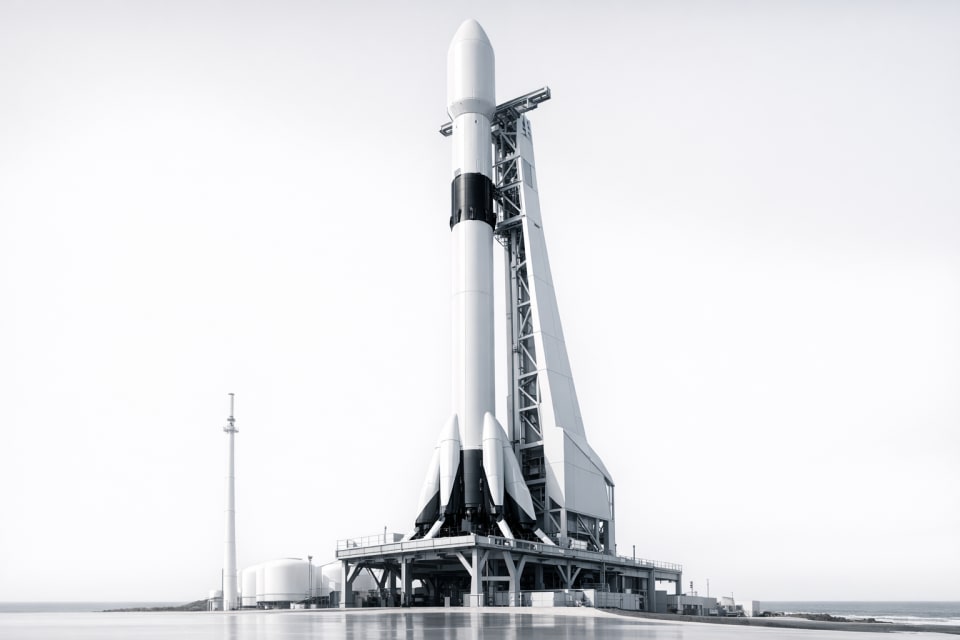
Thirty-two hours. That is all the time SpaceX needed between sending two separate rockets off the same pad at Vandenberg Space Force Base. No orbital launch operator has ever managed that before, and the gap between those two liftoffs is now the new benchmark for what rapid pad turnaround actually looks like.
To appreciate why this matters, consider how launch pads have traditionally worked. Preparing a pad for a single mission typically takes days at minimum, often longer. Ground crews inspect, refurbish, and reconfigure equipment.
Fueling systems get checked. Safety reviews stack up. The idea that all of that could be compressed to fit inside a single calendar day, with hours to spare, would have seemed implausible not long ago.
SpaceX just made it look almost routine.
Who Was Flying and Why It Matters
Both missions carried payloads for US government customers. The US Space Force and the National Reconnaissance Office were the clients on these back-to-back flights, which immediately elevates the significance of the record beyond a pure engineering stunt.
The NRO operates some of the most sensitive reconnaissance satellites the United States puts into orbit. These are not commercial broadband constellations. The payloads serve national security functions, and the ability to get them to orbit quickly, and to do so again shortly after, has real strategic weight.
For the Space Force, rapid and reliable access to orbit is a stated priority. The service has spent years pushing for a more responsive space launch architecture, one that does not require months of scheduling lead time for every mission.
What SpaceX demonstrated at Vandenberg is exactly the kind of operational tempo the Space Force has been asking the industry to build toward.
What Makes a 32-Hour Turnaround So Difficult
A launch pad is a complex piece of infrastructure. After a rocket lifts off, the pad absorbs enormous acoustic energy, vibration, and heat. The flame trench and water deluge systems take a beating.
Umbilical connections, hold-down mechanisms, and fueling lines all need inspection before they can be trusted again.
Compressed turnaround times require that inspections, reconfigurations, and any necessary repairs happen in parallel rather than in sequence. That demands both a pad designed for rapid reuse and a ground crew trained to execute under tight time pressure.
It also requires that the second rocket be ready to roll, or already in position, before the first one has even launched.
SpaceX has been building toward this kind of operational cadence for years at multiple sites. The 32-hour achievement is not a lucky sprint; it reflects systematic investment in ground infrastructure and crew procedures that most launch operators have not made.
What Rapid Reuse Could Change for Orbital Operations
A single pad with a 32-hour turnaround capability is effectively a different asset than one requiring several days between flights. At that speed, a single pad can theoretically support well over a hundred launches per year if demand, vehicles, and logistics align.
That is a ceiling no one in the orbital launch business has ever come close to testing.
Figures as stated in this article.
For customers, the implications are concrete. Faster pad availability means more scheduling flexibility. A satellite operator facing a narrow launch window no longer has to worry as much about missing it because the pad is still being prepared from a previous mission.
For national security customers in particular, that flexibility could translate into faster deployment of replacement satellites or new capabilities during a crisis.
There is also a competitive dimension here: other launch providers around the world are working to increase their own cadence, and a demonstrated 32-hour pad turnaround raises the standard that any serious competitor needs to match.
A sub-32-hour turnaround makes a single pad viable for missions that would previously have required scheduling across multiple facilities.
Faster pad reuse means the NRO and Space Force can get payloads to orbit more quickly when strategic circumstances demand it.
At this tempo, a single pad becomes capable of a volume of flights that redefines what high-cadence orbital launch actually means.
Every competitor now has a concrete number to measure themselves against, which is likely to drive broader infrastructure investment.
Vandenberg as a Proving Ground
Vandenberg Space Force Base, on the California coast north of Los Angeles, is the Space Force's West Coast spaceport and the nation's only high-capacity site for polar-orbit launches.
Satellites that need to pass over the entire Earth's surface, including reconnaissance satellites, typically launch from here because polar trajectories require a southward flight path over open ocean. That makes Vandenberg a critical node in US space architecture and the natural home for many NRO missions.
It is worth noting that classified national-security launches also fly from Cape Canaveral in Florida, so Vandenberg is not the sole site for sensitive government payloads. Even so, pulling off back-to-back launches from the same Vandenberg pad is a proof of concept at a facility where the operational stakes are very real.
The record was set in a place where rapid reuse genuinely matters.
The Broader Tempo Shift in Commercial Launch
SpaceX has been increasing its global launch cadence aggressively for several years now. The company has pushed toward launching dozens of missions annually across its various pads, a pace that required solving exactly the kinds of rapid-turnaround problems that the 32-hour record reflects.
What is new about this achievement is the concentration of that speed into a single pad over a single day. It collapses what used to be a multi-day minimum into something closer to a shift change at a busy airport.
The analogy is imperfect, launching rockets involves considerably more scrutiny than departing a commercial flight, but the directional shift in operational thinking is real.
Faster access to orbit, repeated at scale, changes the calculus for anyone planning a space-based capability. That is not a small thing, and a 32-hour turnaround record is a concrete data point that those planning conversations now have to account for.
Sources
Space.com, SpaceX NROL-136 launch coverage, updated November 23, 2026. SpaceX launch pages for USSF-317 and NROL-136. U.S. Space Force Space Systems Command, Space Access page. Vandenberg Space Force Base fact sheet. U.S. Space Force Commercial Space Strategy Annex 1. National Reconnaissance Office, NROL-69 launch page. Space.com, Vandenberg 100-mission approval, October 17, 2025.