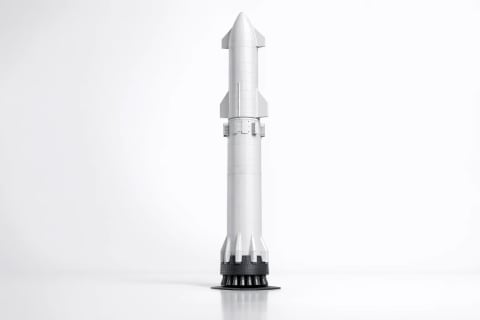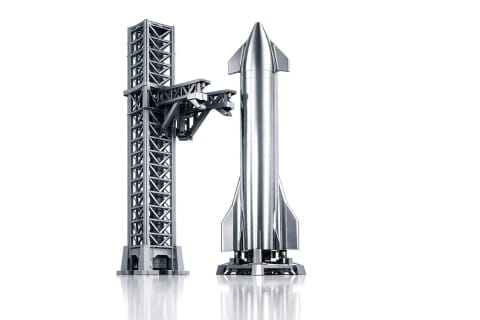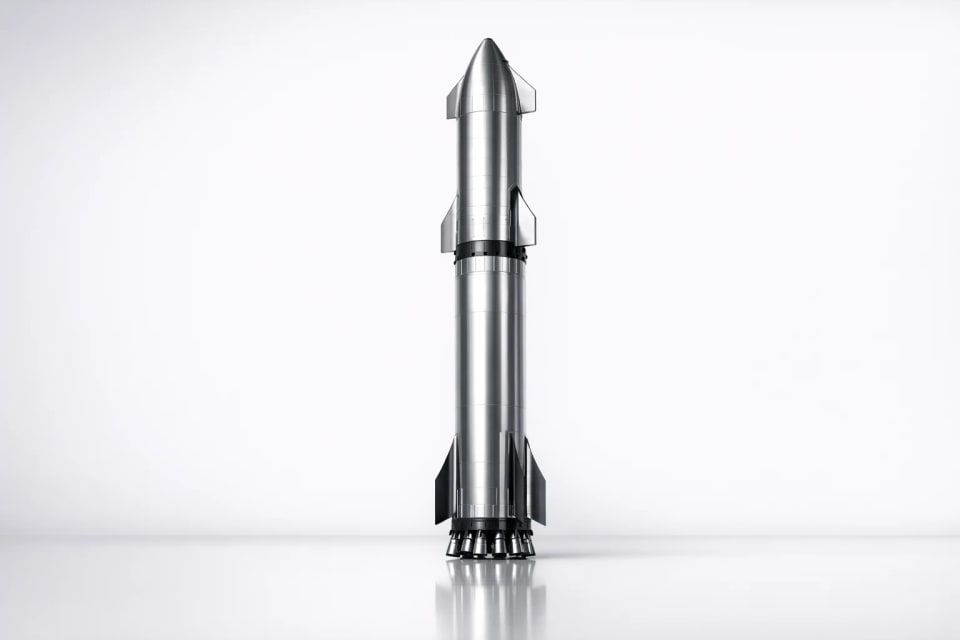
After thirteen increasingly ambitious test flights, SpaceX is finally ready to say the quiet part out loud. Starship Flight 14 is aiming for orbit, and the company has formally communicated that intent to federal regulators. This is not another high-altitude hop or a partial trajectory demonstration.
If everything goes according to plan, the world's largest and most powerful rocket will complete a full orbital loop around Earth for the first time, a milestone the entire aerospace industry has been watching for with a mix of anticipation and genuine uncertainty.
What "Orbital" Actually Means Here
There's a lot of loose language thrown around in spaceflight coverage, so it's worth being precise. Reaching orbit is not just about going high. It means achieving a horizontal velocity of roughly 17,500 miles per hour so that the spacecraft is essentially falling around the planet continuously rather than just going up and coming back down.
Previous Starship flights reached impressive altitudes and demonstrated controlled splashdowns, but none completed a full orbital pass.
For context, Flight 7 through Flight 13 progressively refined the vehicle's flight profile, tested heat shield performance, proved out the Super Heavy booster's catch mechanism at the Mechazilla tower, and validated propellant transfer concepts. Each flight added data.
But orbital insertion requires a qualitatively different level of performance from the Raptor engines, the propellant management systems, and the vehicle's thermal protection during reentry. The engineering gap between "really fast and high" and "actually in orbit" is significant.
SpaceX's filing with regulators signals that the Ship upper stage will complete a full orbit before reentering over a designated splashdown zone. Whether the company intends to attempt a catch of the Ship with the Mechazilla arms on this flight, or simply allow it to splashdown in the ocean, will shape how the mission is scored in the aftermath.
How We Got Here
The Starship program has moved at a pace that no traditional aerospace program could match, largely because SpaceX treats failures as data rather than disasters. Flight 1 back in April 2023 ended in a spectacular explosion minutes after liftoff. Flight 2 got further before the vehicle was intentionally destroyed.
Flights 3 and 4 demonstrated controlled reentry heating and splashdown capability for the Ship. By Flights 7 and 8, SpaceX was successfully catching the Super Heavy booster with the launch tower's mechanical arms, a feat that most engineers outside the company had privately called somewhere between audacious and impossible.
Each iteration came with hardware upgrades. The Raptor 3 engine variant promised better efficiency and reliability. SpaceX also made significant changes to the heat shield tiles after earlier flights revealed erosion patterns during reentry, particularly around the flap actuators.
Flight 14's Ship is expected to incorporate improved tile bonding and potentially redesigned flap protection to handle the more demanding thermal loads of a full orbital reentry, which will be substantially hotter and longer than what previous test flights encountered.
The Regulatory Path Wasn't Simple
Getting a vehicle this large licensed for orbital flight is its own complicated story. The FAA's review process for Starship has been a recurring source of friction, with SpaceX and federal regulators working through environmental assessments, mishap investigations, and license amendments after each test.
The company has at times been openly critical of the review timelines, and there's been genuine tension between SpaceX's rapid iteration philosophy and the more methodical pace regulators typically require.
Filing notice of an orbital attempt with regulators is a significant bureaucratic step. It doesn't mean the FAA has issued a license for Flight 14 yet, but it indicates SpaceX is preparing the paperwork and that the agency is actively reviewing the request.
Given the trajectory of approvals over the past year, the expectation within the industry is that the license will come through, though the exact timing remains subject to the FAA's own review process.
Why This Flight Matters Beyond the Spectacle
SpaceX is not building Starship as a science project. The vehicle is central to at least three major programs that have real deadlines and real money attached to them.
NASA's Artemis program selected a lunar variant of Starship, called the Human Landing System, to carry astronauts from lunar orbit down to the Moon's surface. That contract is worth billions and is tied to Artemis III, which has already slipped multiple times.
NASA needs Starship to demonstrate orbital capability, propellant transfer, and reliable reentry before it will be comfortable putting astronauts anywhere near the vehicle. Flight 14 is a prerequisite for the program to move forward in any meaningful way.
Separately, SpaceX has commercial satellite customers lined up who want to use Starship's enormous payload capacity, roughly 100 to 150 metric tons to low Earth orbit in a fully reusable configuration. That's several times more than any other operational rocket. Getting to orbit is table stakes for those missions.
Then there's the Mars ambition, which Elon Musk has been vocal about for years. SpaceX has publicly discussed sending uncrewed Starship missions to Mars as early as 2026, with crewed missions to follow. None of that happens without orbital capability being thoroughly validated first.
Starlink's Role in the Equation
SpaceX's own Starlink constellation also stands to benefit enormously from a working orbital Starship. The current Falcon 9 can carry a limited number of Starlink V2 Mini satellites per launch.
A fully operational Starship could carry significantly more satellites per flight, which would dramatically accelerate the pace at which SpaceX can expand and upgrade its global internet coverage network. In that sense, Flight 14's success has direct financial implications for SpaceX's most profitable current business line.
What Success and Failure Look Like
SpaceX is careful to frame every test flight as a data collection exercise, which gives them some rhetorical flexibility if something goes wrong. But the stakes on Flight 14 are higher than any previous mission. The program needs a clean orbital insertion and a controlled reentry to move into the next phase of development.
A successful flight would look like this: Super Heavy boosts Ship to stage separation, the booster returns to Starbase and either lands via catch or conducts a controlled splashdown, Ship's Raptor vacuum engines complete the burn to orbital velocity, Ship completes one full orbit, and then survives the reentry heating before splashing down in the target zone in the Indian Ocean.
Every one of those steps has potential failure points.
The reentry is probably the biggest unknown. Ship's heat shield has been progressively improved, but the thermal environment of an orbital reentry is substantially more intense than what previous test flights demonstrated.
If the tiles fail or the flap mechanisms are compromised during reentry, SpaceX will have a lot of data to work with but another high-profile loss on its hands. That wouldn't kill the program, but it would push the Artemis timeline further into the future and add pressure to an already strained relationship with NASA's schedule planners.
The Bigger Picture for Human Spaceflight
Starship Flight 14 arrives at a moment when commercial spaceflight is genuinely at an inflection point. Blue Origin is flying its New Glenn rocket and working toward more ambitious missions. Rocket Lab is scaling up.
United Launch Alliance's Vulcan is flying. But none of those vehicles come close to Starship's intended payload capacity or reusability ambitions. If SpaceX can demonstrate a fully reusable orbital vehicle at this scale, it fundamentally changes the economics of getting things, and eventually people, to space.
The cost implications alone are staggering to think about. SpaceX has estimated that a fully reusable Starship could eventually drive the cost per kilogram to orbit down to a few hundred dollars, compared to the thousands of dollars per kilogram that even competitive rockets charge today.
That's not guaranteed, and it depends on the reusability proving out over many flights, but the trajectory is pointing somewhere genuinely different from anything that's come before.
For space enthusiasts and industry watchers, Flight 14 is the most important rocket test since the early days of Falcon 9's booster recovery demonstrations. Those flights seemed improbable too, right up until they worked. SpaceX has earned enough credibility at this point that outright skepticism feels misplaced, even if caution is still warranted.
The company knows how to build rockets. Now it needs to prove Starship can actually do the job it was designed for.
Keep your eyes on the skies this week. This one matters.