Starship Flight 13 Was More Than a Test Flight. It Was a Statement.
SpaceX has a habit of underplaying what it's actually attempting, then delivering footage that makes your jaw drop. Flight 13 of Starship followed that exact pattern. On the surface, it looked like another incremental step in a long test campaign.
Underneath, SpaceX was running at least one previously undisclosed experiment, capturing dramatic new onboard video through the ship's payload bay camera, and actively discussing whether the Ship upper stage itself could be caught by the Mechazilla arms at Starbase.
That combination of factors makes Flight 13 feel qualitatively different from its predecessors.
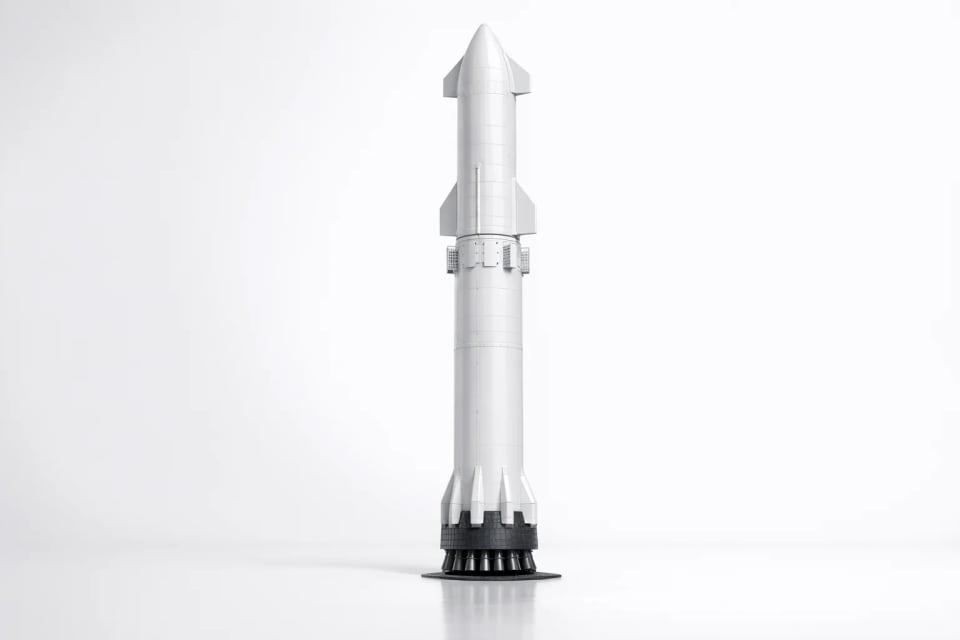
To understand why this matters, you need a quick reset on where the program stands. Starship is SpaceX's fully reusable two-stage rocket system, standing roughly 123 meters tall when stacked. The Super Heavy booster forms the first stage, generating approximately 16.7 million pounds of thrust from 33 Raptor engines.
The Ship upper stage sits on top and is itself a massive vehicle, capable of carrying over 100 metric tons to low Earth orbit in its fully reusable configuration. SpaceX has already demonstrated booster catch with the Mechazilla tower's mechanical arms, a feat that seemed almost theatrical until the hardware actually worked.
Flight 13 is pushing the program into the next chapter of that story.
The Secret Test Nobody Knew Was Coming
Perhaps the most intriguing element of Flight 13 was the revelation that SpaceX conducted a test that had not been publicly announced or included in pre-flight briefing materials.
SpaceX has not disclosed the full nature of what was being evaluated, which is not entirely unusual for a company that treats its test campaigns as proprietary engineering data.
But the fact that it surfaced post-flight, combined with the overall performance envelope of the mission, suggests SpaceX is now comfortable layering additional experimental objectives on top of primary flight goals.
This is actually a sign of program maturity. Early Starship flights were almost entirely focused on surviving the flight and gathering basic aerodynamic and propulsion data. Flights 1 and 2 ended in rapid unscheduled disassembly, to use SpaceX's preferred euphemism.
By the time Flight 4 demonstrated controlled reentry of the Ship, the team had enough confidence to start stacking secondary objectives.
Flight 13 running a concealed test suggests the vehicle has become reliable enough that SpaceX can treat it more like a platform than a prototype, assigning it tasks beyond the headline objective without serious concern that those tasks will compromise the primary mission.
What was the test? Speculation in the aerospace community has ranged from propellant transfer experiments, which are critical for NASA's Human Landing System contract, to structural load measurements tied to catch hardware that would need to be added to Ship for arm recovery. SpaceX has not confirmed either theory.
What's clear is that the agency relationship with NASA, which requires Starship to demonstrate propellant transfer in orbit before crewed lunar missions can proceed, creates enormous pressure to use every flight as efficiently as possible.
What the Payload Camera Showed
If the secret test was the analytical storyline of Flight 13, the payload bay footage was the emotional one. SpaceX released onboard video captured from cameras positioned inside Ship's payload section, showing views that the public has never seen from this angle during an actual flight.
The footage documented the vehicle's behavior during ascent, the coast phase, and reentry in ways that ground-based tracking simply cannot replicate.
Several things stood out to observers who analyzed the footage carefully. First, the thermal environment during reentry was visible in a new level of detail.
Plasma glow around the vehicle's heat shield tiles appeared on the video, confirming that the revised tile arrangement and bonding methods SpaceX has been iterating on since early flights are holding up under real flight conditions.
Second, the attitude control during the high-angle reentry, where Ship essentially falls belly-first to maximize atmospheric drag, looked notably stable. The vehicle's flaps were visible making corrections in what appeared to be a controlled, almost routine sequence.
For space enthusiasts, this kind of footage is intrinsically exciting. For engineers and investors watching the program, it serves a different purpose: it's evidence that the vehicle's behavior matches simulation models closely enough that SpaceX can publish the video without embarrassment.
You don't release footage of your rocket doing something unexpected unless you either want to acknowledge a problem or you're confident the footage confirms your predictions. Flight 13's video felt like the latter.
Catching the Ship: From Ambition to Active Planning
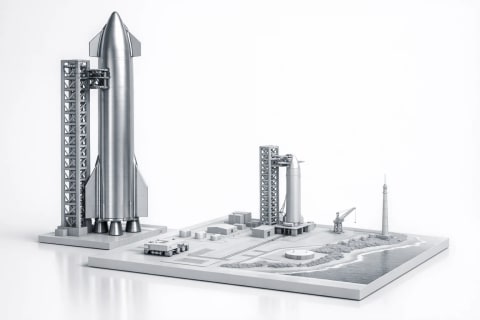
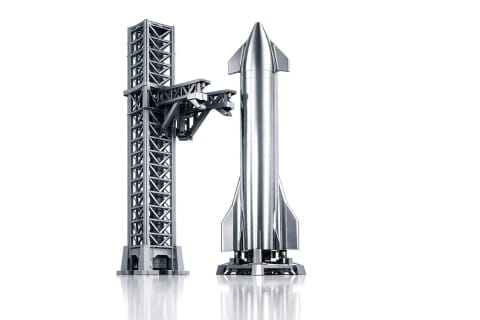
The biggest strategic development surrounding Flight 13 is the seriousness with which SpaceX is now discussing catching the Ship upper stage with the launch tower's mechanical arms, the same Mechazilla system that already catches Super Heavy. This would close the loop on full rapid reusability.
Right now, Ship splashes down in the Indian Ocean at the end of each test flight. Ocean recovery is slow, expensive, and potentially damaging to hardware. Arm catch would allow SpaceX to inspect, refurbish, and refly Ship on timescales measured in days rather than weeks.
Catching Ship is significantly harder than catching Super Heavy, for a few reasons. The booster performs a subsonic return to the launch site, giving the catch system a relatively controlled final approach. Ship comes in from orbital or near-orbital velocity, sheds that speed through atmospheric reentry, then transitions to a terminal descent phase.
The energy management and precision required are on a different level. SpaceX has been adding and reconfiguring hardware on Ship across recent flights, including changes to the thermal protection system and landing leg concepts, some of which appear to be oriented toward making an arm catch mechanically feasible.
SpaceX's Gwynne Shotwell and Elon Musk have both referenced Ship catch as a near-term goal in public comments surrounding Flight 13. The company has not set a specific flight number target, but the engineering discussions and hardware changes suggest it's a priority for the next several flights rather than a distant aspiration.
Why This Phase Feels Different
Starship's test campaign has moved through several distinct eras. The early flights were about proving basic concepts and surviving long enough to gather data. The middle phase introduced controlled reentry, propulsive landing attempts, and the first successful booster catch.
Flight 13 sits at the beginning of what feels like a third era, one defined by operational testing rather than pure development testing.
The distinction matters. Operational testing means you're no longer asking whether the vehicle can perform a maneuver. You're asking how consistently it can perform that maneuver, under what conditions it degrades, and how quickly you can turn it around afterward.
Running undisclosed secondary tests, capturing detailed onboard data, and planning for full-stack reusability are all behaviors associated with a program that is preparing to do something real with the vehicle, whether that's NASA lunar missions, Starlink satellite deployment at scale, or eventually commercial passenger flights.
SpaceX's stated goal is to reach flight rates that make Starship economically transformative, potentially dozens of flights per year per vehicle. That requires catch-and-refly of both stages. Flight 13 pushed that goal measurably closer.
What Comes Next
The program's near-term roadmap, based on publicly available regulatory filings and SpaceX statements, includes several milestones worth tracking closely.
- Ship catch attempt: SpaceX is working toward catching the upper stage with Mechazilla arms, which would represent full-stack reusability for the first time.
- Propellant transfer demonstration: Required by NASA before crewed Artemis lunar landing missions can proceed. This experiment needs to happen in orbit, meaning Ship must reach orbit and stay there long enough to conduct the test.
- Payload deployment: Starship is expected to eventually carry Starlink V3 satellites, which are too large for Falcon 9. Getting to routine payload deployment requires clearing the reusability and reliability milestones first.
- Crew configuration development: A crewed version of Ship with life support, crew accommodations, and an escape system is in development, though no crewed test flight date has been announced.
Each of those milestones has dependencies on what Flight 13 and its successors prove out. The secret test, the payload camera data, and the Ship catch discussions are all feeding into that chain.
The Bigger Picture for Space Enthusiasts
For people who follow spaceflight closely, Starship's current phase is genuinely exciting in a way that goes beyond spectacle. The vehicle is enormous, loud, and visually dramatic, sure. But the real story is about economics.
If SpaceX achieves rapid full reuse of Starship, the cost per kilogram to orbit could drop so dramatically that it reshapes what's possible in space, from satellite constellations to lunar infrastructure to eventually crewed Mars missions.
Flight 13 didn't solve all of those problems. No single flight will. But it demonstrated a program operating with increasing confidence, layering complexity onto complexity and mostly getting the results it expects.
That's how you build toward something historic: not in one dramatic moment, but in dozens of flights that individually feel incremental and collectively change everything.
The next few Starship flights are worth watching very closely. SpaceX has earned that attention.